Quackoria Learn
Duck Body Language: What Common Duck Behaviors Mean
A context-first guide to common duck postures and movements: what the evidence supports, what has several possible meanings, and when a behaviour change needs a welfare or veterinary check.
Key takeaways
- One movement rarely has one fixed meaning; combine posture, voice, direction, setting and what happens next.
- Head pumping can occur in courtship and conflict, so the other bird and the following movement matter.
- Bathing commonly includes dipping, shaking, flapping and preening; a brief tail wag after water is not the same as movement tied to every breath.
- Open-bill chasing is a threat, but welfare depends on duration, injuries and whether the other duck can escape and reach resources.
- Panting, persistent isolation, reduced preening or a changed routine are observations to act on, not personality clues or diagnoses.
A duck does not have a dictionary of poses in which one movement always means one thing. The useful clues come in clusters: posture, voice, direction of movement, the other ducks nearby, the weather, and what happened immediately before. This guide shows what common behaviours can suggest, and where observation has to stop short of a diagnosis.
Read the whole scene, not one movement
Start with three questions. Is this normal for this individual? What changed in the last minute? And is the duck moving freely, eating, drinking and staying with the flock as usual? A tail wag after a bath and a tail moving with every breath are not the same event. A lowered head in a courtship group and a lowered head while charging another bird are not the same message.
The safest reading is therefore a ranked one, not a verdict. A movement may fit comfort, courtship or conflict; the surrounding evidence decides which is more likely. Species matters too. Mallards use a wide set of ritualised head, bill and tail movements. Muscovies add a mobile crest, hissing and different voice cues, so a mallard-only chart does not translate perfectly.
| What you see | Common context | What to check next |
|---|---|---|
| Head tucked into back feathers, sometimes on one leg | Resting; tucking a bare leg also reduces exposed surface in cold conditions | Breathing should be quiet, balance steady, and the duck should wake and move normally |
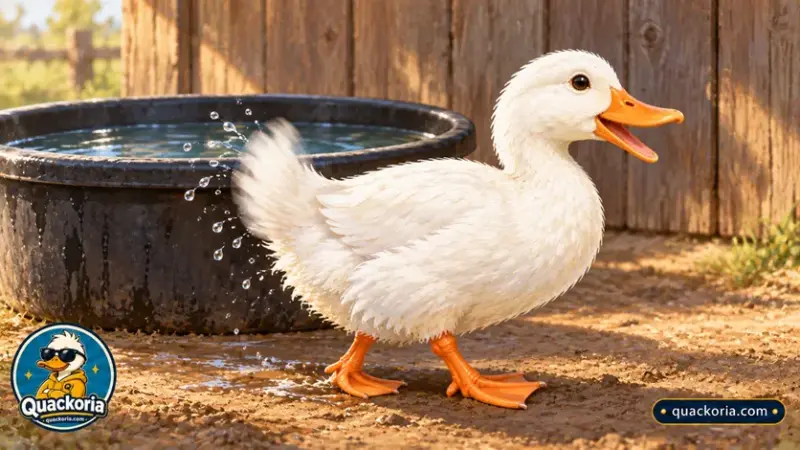
| Head dipping, body shake, wing flap and preening after water | A normal bathing and feather-care sequence | Look for regular access to clean water and feathers returning to a smooth position |
| Rhythmic head pumping between ducks | Often courtship in mallard-type ducks; it can also appear in excited social encounters | Watch the partner, season, calls and the movements that follow |
| Open bill, low rush or repeated chase | Threat, displacement or conflict | Can the other bird escape, and is one duck being repeatedly excluded from food or water? |
| Sudden upright freeze or alarm calling | Something has attracted attention or caused alarm | Scan the same direction, count the flock and check the enclosure |
| Open-mouth breathing with wings held away | Heat loss is a leading possibility in warm conditions | Provide shade and water; persistent or laboured breathing needs urgent veterinary advice |
| Isolation, less preening or a changed daily routine | A welfare or health change, not a specific diagnosis | Compare appetite, drinking, droppings, movement and breathing; contact a qualified vet if concerned |
Relaxed resting postures
A settled duck may sit low with the feet hidden, stand on one leg, or turn the head and tuck the bill into the feathers of the back. These are ordinary rest postures. Standing on one leg can also conserve heat by halving the bare leg area exposed, which is why it is especially conspicuous on cold ground or ice. It is not proof that the duck is cold, and studies of birds show that comfort and energy-saving can overlap.
Look at symmetry and recovery. A resting duck changes position, wakes when the flock moves and uses both legs normally afterward. A bird that continually avoids one leg, limps when it starts walking, cannot balance, or stays behind needs a physical check rather than a body-language interpretation. The comparison is the duck’s own normal movement.
Head tucking is not the same as a collapsed neck or a bird too weak to hold its head up. Quiet, even breathing and a normal response to nearby movement belong with sleep. Open-mouth breathing, repeated tail movement with the breath, discharge, loss of balance or failure to respond do not.
Bathing, shaking, flapping and preening
A bath can look dramatic. Ducks dip or roll the head, throw water over the body, rub the wings, shake, flap, scratch and then spend time arranging the feathers with the bill. EFSA’s waterfowl welfare review describes bathing as a sequence commonly interrupted or followed by preening, and research on domestic ducks treats wet preening as a core water-related behaviour.
That sequence explains why an energetic wing flap or tail shake immediately after water is usually unremarkable. The movements shed water and settle the plumage. The context matters: the same wing position held continuously on a hot day has a different meaning, and repeated loss of balance during a routine flap is not normal.
Preening is maintenance, not vanity. A duck works along individual feathers, reaches toward the preen gland near the tail and redistributes material through the plumage. A sudden reduction in preening, persistent dirty or waterlogged feathers, or avoiding water when that duck normally bathes is a change worth recording. The duck water guide explains what water access has to let the bird do.
Head bobbing: courtship, excitement or conflict?
Head movements are among the easiest signals to over-translate. Cornell documents synchronised head pumping in mallard courtship, along with brief displays such as head-up-tail-up. The mallard life-history account also describes males facing off with a head-bob. The visible movement alone therefore does not identify the motive.
Courtship is more likely when two birds answer one another rhythmically, when the display includes the characteristic calls and postures of that species, and when it occurs within a courtship group. Conflict is more likely when the body is driving forward, the bill is open, another bird is retreating, or the movement ends in a chase. A pet duck bobbing toward a familiar person may be socially aroused or anticipating something, but there is no published decoder that turns that observation into the single word “happy.”
The detailed evidence and limits are in why ducks bob their heads. Treat the movement as a prompt to keep watching, not as the end of the observation.
Tail wagging
Tail movements also appear in more than one setting. They can be part of bathing and body-shaking, and several duck species include tail lifting or wagging in displays. A brief wag after swimming, preening or greeting the flock has a different pattern from a tail that rises and falls in time with every breath.
That distinction is practical. A momentary wag belongs to the event around it. Repeated respiratory movement belongs with the breathing assessment: listen for effort or noise, look for an open bill, and see whether the duck is active and eating. The focused guide to duck tail wagging separates the common contexts without claiming that one wag reveals an emotion.
Threats, chasing and flock pressure
Cornell describes an open bill as a mallard threat and breast-to-breast pushing among males. Chasing can settle a brief disagreement about space, but duration and access decide whether it is becoming a welfare problem. A bird that can step away and immediately return to normal flock life is in a different situation from one pursued across the run, pinned, injured, or kept away from feed and water.
Watch resources as well as birds. One narrow doorway, one desirable nest corner or one feeding point can turn normal competition into repeated exclusion. Add distance and escape routes before assuming that the “aggressive” duck has a fixed personality. During breeding activity, pay particular attention to females exposed to repeated mounting and to any bird singled out by several others.
A Muscovy needs its own reading. Cornell describes crest raising, head pumping, tail shaking, wing lifting and hissing in its displays. Hissing is part of the species’ normal repertoire and does not by itself mean that a Muscovy is about to attack. Direction, distance and whether the bird advances still matter.
Freezing, alarm and sudden loud calling
A duck that becomes tall and still is gathering information. If several birds orient toward the same point, look there before walking into the flock. An alarm may be overhead, behind the fence or already inside the run. At night, a sudden change from settled quiet to persistent calling is a reason to check the enclosure, not evidence of one particular predator.
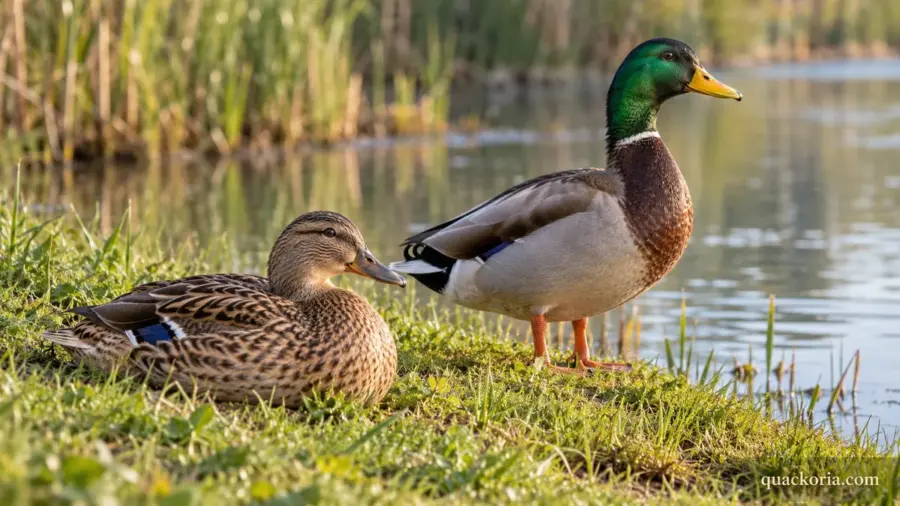
Voice adds context. The classic loud mallard quack is primarily a female sound; a drake’s voice is quieter and raspier, and Muscovies are usually much quieter still. That makes “more vocal than usual” individual and species-specific. The sound guide explains what duck calls can and cannot tell you, while the duck sexing tool combines voice with other clues and reports uncertainty rather than forcing a result.
Postures that are welfare signals, not personality clues
Some observations should move the question from “what does this mean?” to “what does this bird need?” In hot conditions, panting and holding the wings away from the body are recognised heat-loss responses in poultry, and duck research has recorded more panting and wing spreading under heat stress. Move the flock to shade, make appropriate water available and use the steps in keeping ducks cool in summer. Severe, persistent or laboured breathing is an emergency, whatever the weather.
Likewise, a change in normal appetite, drinking, movement, preening, social position or droppings is evidence to record, but not a diagnosis. The UK duck welfare code lists changes in feed and water intake, preening, activity and coordination among early signs of ill health. Use the common health problems guide to organise what you see, then contact a qualified avian or farm veterinarian when a duck is unwell or you are unsure.
A five-minute observation method
- Count first. Make sure every duck is present before interpreting the noisiest one.
- Watch without approaching. Record posture, direction and which birds are involved.
- Add the setting. Note heat, wind, water, feeding, a new bird, a nest, a nearby animal or a recent disturbance.
- Wait for the next movement. What follows often separates a bath, display, threat and breathing problem.
- Compare with baseline. A dated note or short video for your veterinarian is more useful than an emotion assigned from one pose.
The goal is not to become certain about every movement. It is to notice patterns, recognise the behaviours that are well documented, and respond quickly when the whole bird — not one gesture — has changed.
Frequently asked questions
How can I tell if a duck is relaxed?
A relaxed duck may sit low, tuck its bill into its back feathers or stand on one leg, while breathing quietly and rejoining normal flock activity when it wakes. No single pose proves an emotion; compare the whole bird with its normal routine.
Why does my duck bob its head at me?
Head bobbing occurs in documented courtship and social or conflict displays. Around a person it may accompany social arousal or anticipation, but research does not provide a one-word pet-emotion decoder. Watch the voice, direction, other ducks and what happens next.
Why does a duck wag its tail?
Tail movements occur after bathing and in displays. A brief wag in that context is different from a tail moving repeatedly with each breath, which should be assessed with the duck's breathing and general condition.
What does an open bill mean?
In mallards an open bill is a documented threat signal. Distance and movement still matter: an open-bill rush or chase is stronger evidence of conflict than a single frozen posture.
Is standing on one leg normal?
Yes, it is a common rest posture and can reduce heat loss by tucking one bare leg into the feathers. Lameness after the duck starts moving, persistent avoidance of one leg or poor balance is not explained by the resting pose.
When should behavior worry me?
Act on a clear change in appetite, drinking, breathing, movement, preening, social position or routine, especially when several change together. Contact a qualified avian or farm veterinarian when a duck is unwell or you are unsure.
Sources
- Cornell Lab of Ornithology, Mallard Life History
- Cornell Bird Academy, Dance Moves for Ducks: How to Recognize Courtship Displays
- Cornell Lab of Ornithology, Muscovy Duck Life History
- EFSA Journal, Welfare of ducks, geese and quail on farm
- GOV.UK, Ducks: welfare recommendations
- Stanford Birds, Temperature Regulation and Behavior
- Pavlovic et al., Morphology and geography predict heat conservation behaviours across birds
- Ma et al., Heat stress impairs metabolism and productivity of egg-laying ducks