Quackoria Learn
Can Ducks Eat Grapes?
Yes — halved or quartered, and in treat quantities. The grape toxicity warning you may have read is real, but it is about dogs; no duck source advises against grapes, and no avian evidence exists either way.
Key takeaways
- Ducks can eat grapes. Metzer Farms and the Open Sanctuary Project both list them as treats, cut to bite size.
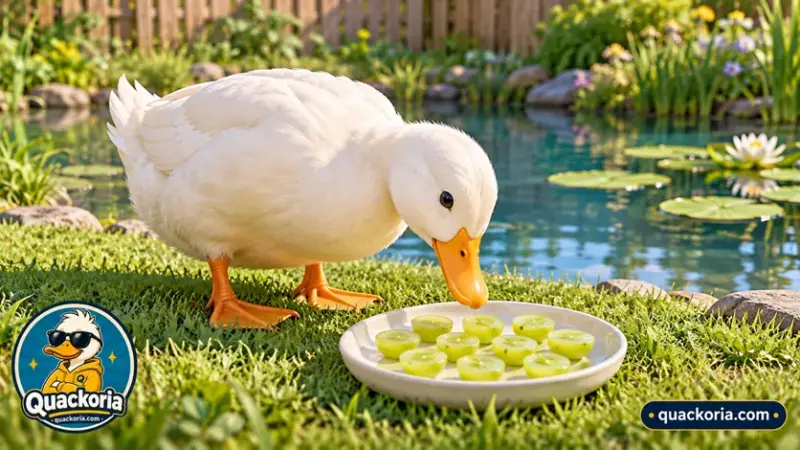
- Halve or quarter every grape: ducks swallow whole, and a whole grape is the piece that lodges.
- The grape and raisin poisoning warning is about dogs. The Merck Veterinary Manual reports cases only in dogs and does not mention birds.
- A grape is about 80 per cent water and 15 per cent sugar with under 1 per cent protein — a treat, not food.
- Keep all treats under a tenth of the diet, and wash grapes: they sit fourth on the Environmental Working Group's 2026 pesticide-residue list.
Yes — ducks can eat grapes, and most of them will fight you for the bowl. The one rule that matters is size: ducks swallow whole, and a whole grape is exactly the piece that lodges, so halve or quarter them first. The second rule is quantity, because a grape is mostly sugar and water and gives a duck almost nothing it actually needs.
The short answer
Metzer Farms, a California duck hatchery, lists grapes with strawberries, blueberries, bananas and apples as “amazing treats for your ducks”, with one instruction: “Make sure to cut them up into bite-sized pieces.” The Open Sanctuary Project’s duck diet guide says the same in two words — “Grapes – chopped”. No duck or poultry source we could find advises against grapes for ducks. The warnings you may have seen belong to a different animal, and that is worth explaining, because it is the reason grapes get asked about so often.
The dog warning, and why it is not about ducks
Grapes and raisins can cause kidney failure in dogs. The Merck Veterinary Manual’s entry on the subject is clear about who is affected: “Cases reported to date have been in dogs; anecdotal reports exist of renal failure in cats and ferrets after ingesting grapes or raisins, although there are no published case reports in these species.” Birds are not mentioned at all. The suspected culprit is tartaric acid — and Merck explains why it hits dogs in particular: “Dogs poorly excrete organic acids because they lack the organic acid transporters that other species have, allowing tartaric acid to accumulate in the proximal renal tubular cells.”
So the grape warning is real, specific, and canine. We looked for any avian evidence of grape toxicity and found none in either direction, which is why our can-ducks-eat checker files grapes as “contested” rather than “safe”: a duck hatchery recommends them, a veterinary manual flags them for a different species, and nobody has tested ducks. In practice, a duck keeper who halves grapes and keeps them to treat quantities is following the only duck-specific advice that exists.
What is in a grape for a duck
Per 100 grams of raw red or green grapes, the US Department of Agriculture’s reference data give 80.5 g water, 69 kcal, 15.5 g sugars, 0.72 g protein and 0.9 g fibre, with 191 mg potassium, 10 mg calcium and 3.2 mg vitamin C. Read that as a duck would: almost all water and sugar, next to no protein. A complete duck feed runs at 16 to 20 per cent protein, as what to feed ducks sets out — grapes are under 1. They are a sweet, hydrating extra, not food.
How to feed grapes to ducks
Halve them, or quarter large ones. Ducks do not chew — the ridges in the bill are a sieve, not teeth, as our explainer on duck teeth sets out — so anything they take goes down whole, and a grape is the classic size to lodge. Wash them: grapes sit fourth on the Environmental Working Group’s 2026 list of the produce carrying the most pesticide residue. Seedless are simpler; Bird Spot de-seeds them, and small pieces are the main thing.
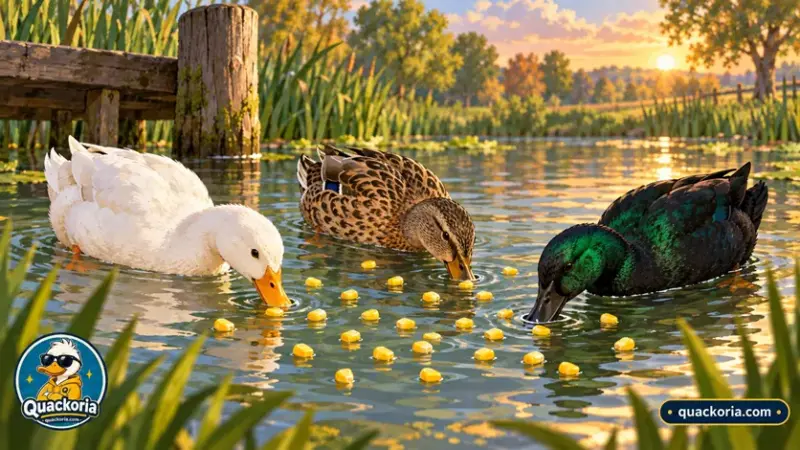
Then keep the amount honest. The rule that runs through poultry extension advice is that treats of every kind stay under a tenth of what a bird eats — Colorado State University Extension puts it as “Treats should make up no more than 10% of their daily diet” — and Metzer’s own warning is that treats “should not be a large part of your ducks’ daily feed. Doing so can and will unbalance their nutritional intake from their regular feed.” For a duck that means a few halved grapes, not a bunch, and not every day. Grapes work best floated in a tub of water, where a duck has to dabble for them, which is the one way of feeding a duck that also keeps it busy.
When grapes are a problem
Whole grapes, for the reason above. Raisins and sultanas are the same fruit with the water taken out, so the sugar is concentrated and the piece is still swallowing-sized; a few are harmless, a handful is a lot of sugar for a bird the size of a duck. Mouldy fruit of any kind is the real hazard in a duck’s bowl — ducks are unusually sensitive to mould toxins — so anything soft, split or furry goes in the bin, not the pen. And grapes should never displace the complete feed: a duck that fills up on fruit is not eating its feed, and a duckling raised on treats instead of a proper starter can develop the leg problems that come from missing niacin.
Grapes for wild ducks at the pond
Halved grapes are a better thing to bring to the park than bread — but not by as much as you might think. Bird Spot’s UK guide calls halved, de-seeded grapes “a firm favourite with ducks”, while the Canal & River Trust’s list of the six best foods for pond ducks does not include fruit at all; it recommends sweetcorn, lettuce, peas, oats, seeds and rice. The Scottish SPCA’s advice is to feed ducks “rarely to avoid overfeeding them”. If you want to bring fruit, bring a little, cut small, and read why bread is the wrong default first.
The wider picture — what a duck’s diet actually looks like across a year — is in what do ducks eat, and the feeding plan for a kept flock is in what to feed ducks.
Frequently asked questions
Can ducks eat grapes?
Yes. Cut them in half or quarters and offer a few at a time. Metzer Farms lists grapes among treats ducks love, and the Open Sanctuary Project's duck diet guide says the same: grapes, chopped.
Are grapes toxic to ducks like they are to dogs?
No evidence says so. Merck's entry on grape toxicosis reports cases in dogs, with only anecdotal reports in cats and ferrets, and does not mention birds. The suspected cause, tartaric acid, builds up in dogs because they lack the transporters that other species use to excrete it.
Can ducks eat grapes with seeds?
Yes, if the pieces are small — the size of a whole grape is the hazard, not the pips. Bird Spot de-seeds them, which is easy with a halved grape.
Can ducks eat raisins?
A few, but they are concentrated sugar and still swallowing-sized. Grapes, halved, are the better version of the same treat.
How many grapes can a duck have?
A few halved grapes, not every day. Every treat together should stay under about a tenth of what a duck eats — Colorado State University Extension's rule — and the complete feed should always be there first.
Sources
- Metzer Farms — Treats your ducks will love
- The Open Sanctuary Project — Daily diet, treats and supplements for ducks
- Merck Veterinary Manual — Grape, raisin and tamarind toxicosis in dogs
- USDA FoodData Central (SR Legacy) — Grapes, red or green (European type), raw, FDC ID 174683, as reproduced by glycemic-index.net
- USDA FoodData Central (SR Legacy) — Grapes, red or green (European type), raw — full nutrient list, FDC ID 174683, as reproduced by tools.myfooddata.com
- Environmental Working Group — 2026 Shopper's Guide to Pesticides in Produce
- Environmental Working Group — Dirty Dozen, full 2026 ranking
- Colorado State University Extension — Raising poultry the organic way: disease control and feeding
- NC State Extension — Feeding ducks (Ferket & Davis)
- Bird Spot — What can I feed ducks?
- Canal & River Trust — What do ducks eat? 6 things you can feed ducks
- Scottish SPCA — What to feed ducks