Quackoria Learn
Can Ducks Eat Bread? What It Really Does to Them
Bread is not poison, but it has little nutritional value for a duck — and a pond where everyone brings bread causes problems no single loaf would.
Key takeaways
- Bread is not toxic to ducks, but it is low in the protein, calcium and minerals they need.
- A duck filled with bread stops foraging for the food that would actually nourish it.
- The real damage is cumulative and comes from a whole pond being fed bread, not from one slice.
- Mouldy bread is genuinely dangerous — it carries a risk of aspergillosis, a fungal lung infection.
- Defrosted frozen peas, sweetcorn, oats and chopped greens are all better choices.
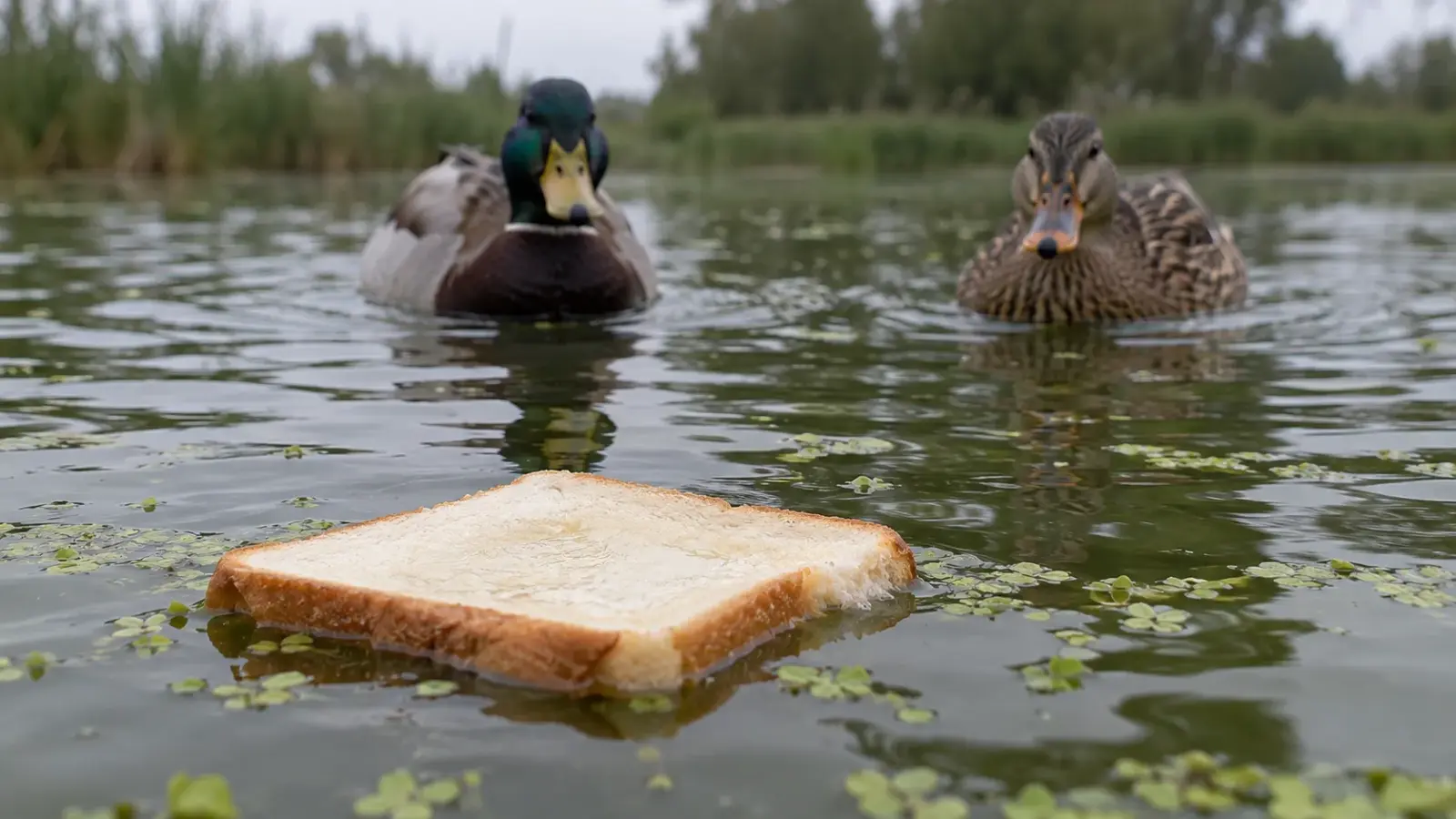
Ducks can eat bread, and a slice will not poison one. But bread has little nutritional value for a duck, and a pond where everybody brings bread causes real problems that no single loaf would. That is the honest answer, and it is worth unpacking, because the internet tends to give either “it kills them” or “it is fine”, and the organisations that have looked at it are more careful than either.
What bread actually does
It fills without feeding
This is the core of it. Bread is mostly refined carbohydrate. It is low in protein, low in calcium, low in the vitamins and minerals a duck needs, and it is bulky. A duck that has filled up on bread stops foraging: the Canal & River Trust says bread “fills the duck’s stomach so that it doesn’t forage for foods it would naturally eat, which can lead to malnutrition”. What it has taken in falls short of what it needs. The USDA gives white bread 8.85 g of protein and 144 mg of calcium per 100 g, while Metzer Farms specifies at least 22% protein in a duckling starter feed and 3% calcium — 3,000 mg per 100 g — in a duck layer feed.
One duck, one slice, one afternoon: no harm done. A duck in a town park that gets most of its calories from bread for months is another matter: New York’s Department of Environmental Conservation says waterfowl at artificial feeding sites “are often found to suffer from poor nutrition”, and the RSPB’s general bird-feeding advice, as quoted by the Real Bread Campaign in 2019, warned that a bird living mostly on bread “can suffer from serious vitamin deficiencies, or starve”. The damage is cumulative, and it belongs to the pond rather than to any one visitor.
It changes the birds’ behaviour
Reliably fed ducks stop moving on: New York’s DEC says feeding shortens or even eliminates their normal migration. Populations concentrate far beyond what the water can support, which raises the rate at which disease passes between birds and leaves the resident birds dependent on handouts — and, the DEC adds, ducks reluctant to leave in the winter “may not survive sudden cold”.
It fouls the water
Uneaten bread goes soggy, breaks down and feeds algae: the Canal & River Trust says it “can cause a build-up of bad nutrients, which can lead to more algae growing around water, more diseases and more pests”. The result can be the familiar green summer pond, and heavy algae can strip the water of oxygen — the University of Arkansas extension service says excessive algae growth “can lead to a lack of dissolved oxygen in the water”, at times low enough to kill fish. Rotting bread also draws rats; the Canal & River Trust notes that an excess of any food will encourage them.
Mouldy bread is a genuine hazard
This is the one danger every side of the argument agrees on. Mould that grows on damp bread can carry Aspergillus spores, and aspergillosis is a serious fungal lung infection in birds. The Scottish SPCA says bread left uneaten and soggy “can lead to a buildup of bad nutrients and mould”, and New York’s DEC calls Aspergillus a fatal disease that “occurs when food is scattered too liberally”. If you take nothing else from this article: never feed bread that is not fresh, and never leave it lying.
What a duck’s bill is built for
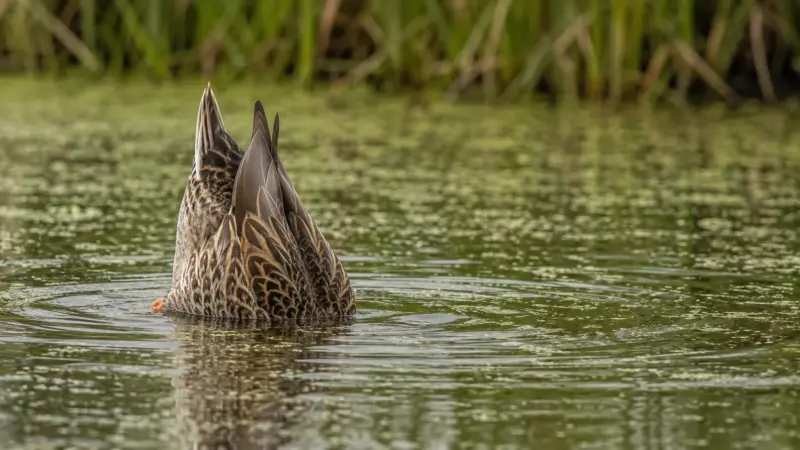
A duck’s bill is a strainer. The ridges along its edges — lamellae — sieve seeds, insects and plant fragments out of water and mud; Ducks Unlimited describes them acting “like sieves”. If you have ever wondered how that works mechanically, ducks have no teeth — food is ground later, in the gizzard, with the help of swallowed grit. None of this stops a duck taking bread — Cornell notes that mallards in city parks “readily accept handouts from parkgoers” — so the case against bread rests on nutrition, the water and crowding, not on the bill.
What to bring instead
All of these are safe, and most are on the Canal & River Trust’s list of foods to bring instead; the Scottish SPCA says peas, sweetcorn and kale should be given in moderation:
- Frozen peas, defrosted — the Canal & River Trust says there is no need to cook them, but defrost them first
- Sweetcorn — tinned and drained, or frozen and thawed
- Porridge oats — uncooked, scattered thinly
- Chopped lettuce, kale, cabbage — torn into duck-sized pieces
- Birdseed — plain mixes are fine
- Duck or waterfowl pellets — the nearest thing to a complete food
Two rules matter as much as the choice of food. Scatter it across the water rather than dropping it in a pile — New York’s DEC warns that food scattered too liberally “piles up and becomes moldy” — and stop when the birds lose interest, as the Canal & River Trust advises. And bring less than you think, and come rarely: in the Scottish SPCA’s words, the “best advice for feeding ducks is to do it rarely to avoid overfeeding them”.
The wider picture of what a duck’s diet should look like across the year is in what ducks eat.
What about ducks you keep?
Everything above applies, with less excuse — you control the whole diet. Kept ducks should be on waterfowl or duck pellets, with greens, grit if their diet calls for it (do ducks eat rocks explains when), and a layer feed for laying ducks, which Metzer Farms says usually carries enough calcium without extra oyster shell. Bread has no place in it at all, not even as a treat: PoultryDVM says bread and other high-carbohydrate foods should never be fed to ducks, and Metzer Farms warns that even the treats it recommends “should not be a large part of your ducks’ daily feed”.
Poor diet shows up as weak legs, thin eggshells and slow growth in young birds. If you are seeing any of that, the guide to common duck health problems covers what to look for and when a vet is the right call.
Why the advice changed
Feeding bread to waterbirds is an old habit. When the Queen’s Swan Marker defended bread in 2018, he wrote that “Swans have been fed bread for many hundreds of years without causing any ill effects”, and he was answering “a great deal of press coverage in recent months” about a “Ban the Bread” campaign.
The reasons the campaigners give are the ones set out above: what bread displaces from a duck’s diet, what uneaten bread does to the water, and what crowding does to the birds. Toxicity is not among them. The RSPB’s general bird-feeding advice, as quoted by the Real Bread Campaign in 2019, said that “bread isn’t harmful to birds” but that “its nutritional value is relatively low”.
The organisations do not agree on the answer. The Scottish SPCA says to avoid bread; the Canal & River Trust lists it among the foods to avoid, though it allows that “in-date bread isn’t unsafe for ducks”; the WWT’s Generation Wild “Feed a bird” activity says “Avoid bread because this isn’t good for them”; and New York’s DEC discourages feeding waterfowl at all. But the WWT has also said that “Bread is fine for water birds as long as it only forms a small part of their diet”, and the Swan Marker calls the claim that bread is bad for swans “not correct”. Full Fact, looking at the question in 2021, put it this way: experts and charities “don’t unanimously agree about the harm it can cause, most believe it’s safe in small amounts”. Where they mention mould, they agree: never feed anything mouldy.
What about in winter?
There is a reasonable argument that supplementary feeding genuinely helps waterfowl through a hard freeze, when natural food is locked under ice. The Queen’s Swan Marker makes it for bread itself: for swans, he wrote, bread “has become a very important source of energy” in “the cold winter months when vegetation is very scarce”. Bread does supply energy — 266 kcal per 100 g for white bread in the USDA’s figures. What its critics say it lacks is the rest of a diet: protein, vitamins and minerals.
If you want to help birds through a cold snap, oats, sweetcorn, peas and seed are what the Canal & River Trust and the WWT suggest in place of bread, and waterfowl pellets are a complete feed. Where wild ducks go instead of enduring the freeze is covered in where ducks go in winter.
What else can ducks eat?
Most of the things people bring to the pond, or find in the fridge, have a clear answer once you look at the sources. We have written them up one food at a time — grapes, tomatoes, strawberries, bananas, rice, watermelon, lettuce, apples, carrots, corn, mealworms and cheese — and the can-ducks-eat checker gives a verdict on the rest. For pond ducks, the short list is still the same: peas, sweetcorn, torn lettuce, oats and rice.
The honest summary
Feeding a duck a piece of bread is not cruelty and it is not going to kill the bird. But even the people who defend bread do not call it good food — the WWT says it is fine “as long as it only forms a small part of their diet”, and the Swan Marker allows that it “may not be the best dietary option for swans compared to their natural food” — and there are half a dozen things you could bring instead that take no more effort and that the bodies against bread recommend.
Bring peas.
Frequently asked questions
Will one piece of bread kill a duck?
No. A single piece of fresh bread will not harm a healthy adult duck. The problem is a pond where hundreds of people each bring 'just a bit', so bread becomes a large part of the birds' actual diet.
Is brown or wholemeal bread better?
Somewhat. USDA figures give commercial whole-wheat bread more than twice the fibre of white bread (6.0 g against 2.7 g per 100 g), more protein (12.4 g against 8.85 g) and more of most minerals. But the Canal & River Trust and the Scottish SPCA make no exception for it, and uneaten wholemeal goes soggy in the water just as white bread does. Better is not the same as good.
What about toast, crackers or crumbs?
The same problem, sometimes worse. Crackers and crisps usually add salt, and Metzer Farms warns that ducks can easily die of a salt overdose. Crumbs left uneaten in the water go soggy, and the Scottish SPCA says soggy bread can lead to a build-up of bad nutrients and mould.
Does bread really cause angel wing?
It is often stated as fact, and the sources disagree. Angel wing is a wing deformity of growing birds. Today's Veterinary Practice describes its causes as likely multifactorial, including increased intake of high-energy food, rapid growth and genetics, with high levels of protein and carbohydrates among the nutritional culprits. On bread itself, Indiana's Department of Natural Resources says most cases are caused by a diet of bread, and PoultryDVM lists feeding bread or other high-carbohydrate foods among the risk factors. On the other side, Professor Christopher Perrins, quoted in the Queen's Swan Marker's statement, says there is no evidence of a connection between feeding bread and angel wing in swans.
Sources
- Canal & River Trust — Why is bread bad for ducks?
- Canal & River Trust — What do ducks eat? 6 things you can feed ducks
- Scottish SPCA — What to feed ducks
- New York State Department of Environmental Conservation — Stop Feeding Waterfowl
- Wildfowl & Wetlands Trust, quoted in Discover Wildlife — Should we feed bread to ducks?
- Wildfowl & Wetlands Trust, Generation Wild — Feed a bird
- The Swan Sanctuary — Official statement on bread from the Queen's Swan Marker (2018)
- Full Fact — Poster claiming bread is healthy for ducks gets its facts in a flap (2021)
- Real Bread Campaign (Sustain) — Should I give bread to ducks and swans? (quotes the RSPB)
- USDA FoodData Central — Bread, white, commercially prepared (SR Legacy 174924)
- USDA FoodData Central — Bread, whole-wheat, commercially prepared (SR Legacy 172688)
- Metzer Farms — Duck and Goose Feed Nutrition
- University of Arkansas Cooperative Extension FSA9094 — Algal Blooms, Scums and Mats in Ponds
- Merck Veterinary Manual — Aspergillosis in Poultry
- Ducks Unlimited — The Scoop on Duck Bills
- Cornell Lab of Ornithology — All About Birds: Mallard life history
- Cornell University Duck Research Laboratory — Duck Nutrition
- Metzer Farms — Grit: Do Ducks Need It or Not?
- Metzer Farms — FAQ
- Metzer Farms — Treats Your Ducks Will Love
- Metzer Farms — Foods Ducks Should Not Eat
- Metzer Farms — Niacin Deficiency and Leg Problems
- PoultryDVM — Angel wing in pet ducks
- Today's Veterinary Practice — Treating Angel Wing Deformity: A Sling for the Wing (Wade, 2022)
- Indiana Department of Natural Resources — Angel Wing Syndrome