Quackoria Learn
Duck Molting and Eclipse Plumage: What Changes and When
A source-backed guide to contour-feather change, simultaneous wing molt, temporary flightlessness, eclipse drakes and the limits of using plumage or a missing sex curl to identify a duck.
Key takeaways
- Molt replaces feathers that cannot repair themselves; a clipped feather remains clipped until it is replaced.
- Ducks and geese replace their main flight feathers together, so wild flying ducks become temporarily flightless.
- Eclipse is the duller post-breeding plumage of males in many species; a brown summer drake has not changed sex.
- The drake curl can be shed, so a flat tail during molt does not prove that an adult is female.
- There is no universal molt date: species, sex, age, latitude and breeding history change the schedule.
- Feather loss with wounds, appetite or weight change, breathing trouble, weakness or isolation needs investigation rather than an automatic 'molt' label.
Molting is how a duck replaces worn feathers. In many ducks it also creates the confusing summer period when a bright drake turns brown, the familiar sex curl may disappear, and a wild bird can be unable to fly while new wing feathers grow. The sequence is real; a single universal calendar is not.
The short answer
| What changes | What it can mean | Important limit |
|---|---|---|
| Loose body feathers and new pin feathers | Old contour feathers are being replaced | Timing and intensity vary with species, sex, age, latitude and breeding history |
| A mallard-type drake becomes mottled brown | Eclipse plumage after breeding | Not every breed shows a clear eclipse change |
| All large flight feathers are replaced together | The simultaneous wing molt of ducks and geese | Wild flying ducks become temporarily flightless; a heavy domestic duck may already be unable to fly |
| The curled drake feather is absent | It may have been dropped during molt | Its absence does not turn an adult into a female and is not a reliable juvenile sex test |
| Egg production changes at the same time | Molt, day length, season and condition may overlap | Do not diagnose a laying change from feathers alone |
Feathers are replaced, not repaired
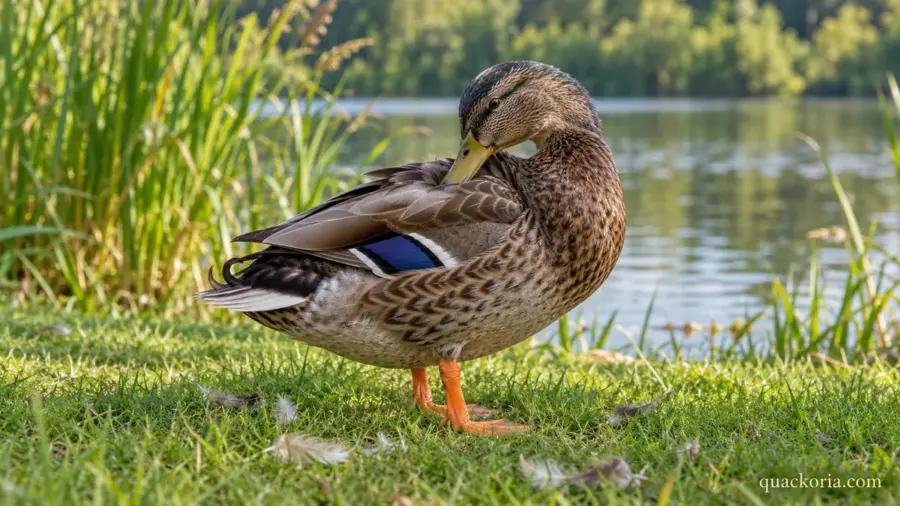
A worn feather cannot heal along its shaft the way skin can. Molt removes it and grows a replacement from the follicle. If a whole feather is lost outside the scheduled molt it may begin regrowing, but a clipped feather remains clipped until that feather is replaced. That is why wing clipping is temporary and why plucking a flight feather is not an equivalent or humane shortcut.
New feathers emerge in a keratin sheath and are commonly called pin feathers. While growing, they have an active blood supply. They can look like narrow spikes before the sheath breaks up and the vane opens. Do not pick at a new feather or treat every pin as a parasite. Bleeding, broken blood feathers or skin injury need individual assessment.
Body feathers and wing feathers do not all follow the same visible sequence. A duck may look scruffy while contour feathers change, then show obvious gaps or short growing quills in the wings. Photographs taken a week apart are often more informative than trying to judge progress from one morning.
Why ducks can become flightless
Many birds replace their flight feathers gradually so that they retain some ability to fly. Ducks, geese and swans use a simultaneous wing molt: the main flight feathers are shed together and regrow together. Cornell’s Mallard account describes a period of roughly three to four weeks without flight at the end of the breeding season; broader waterfowl sources report that the exact flightless interval varies among species.
That vulnerability shapes behaviour. Wild ducks seek food-rich water with cover and escape space, and some make a separate journey to a traditional molting area before the wing feathers are shed. This is molt migration, not the autumn journey to wintering grounds.
For a kept duck, the practical effect depends on breed. A Mallard or Call duck that normally flies may suddenly be grounded. A Pekin already has little or no flight capacity, so the same biological molt may be less obvious. Fencing should never depend on the assumption that today’s grounded bird will remain grounded after the new feathers finish growing.
What eclipse plumage is
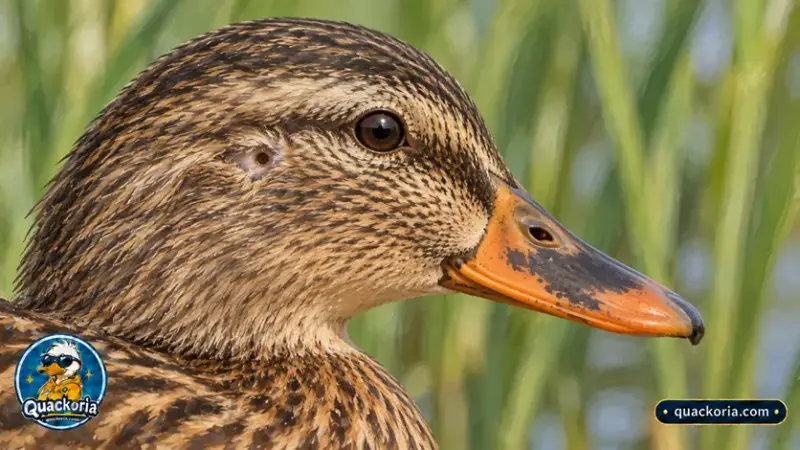
“Eclipse” is the duller plumage worn temporarily by males of many duck species after breeding. The classic example is a mallard drake losing much of the clean grey, chestnut and glossy green pattern and becoming mottled brown. It is not the drake permanently turning female, and it is not a different species arriving at the pond.
The name is useful in the field, but the molt behind it is more complicated than “one summer coat.” Peter Pyle’s specimen study of duck molts explains why traditional plumage names have caused confusion: males of many ducks acquire their bright alternate-looking plumage in autumn rather than spring, and different feather tracts can be replaced in overlapping molts. The honest identification lesson is simple: colour is season-dependent.
Bill colour, overall shape, voice and surviving wing pattern may still help, but none is universal across domestic breeds and hybrids. The male versus female duck guide ranks the clues, and the sexing tool deliberately lowers confidence during molt rather than filling a missing curl with certainty.
Where did the drake curl go?
In many mallard-derived domestic ducks, an adult male usually carries one or more upward-curled tail feathers. Those are feathers, so they can be shed. During molt a known drake may temporarily have a flat-looking tail. The curl returns only when the relevant feathers regrow.
This creates two common mistakes. The first is re-sexing a known male as female in summer. The second is deciding that a young bird without a curl must be female. Juveniles may not yet have the adult feature, Muscovies follow a different identification path, and molt can remove it from an adult. Voice is often a stronger clue in mallard-derived ducks, but even that must be heard clearly and interpreted by species.
When do ducks molt?
There is no responsible one-date answer. Species, sex, breeding success, age, latitude and local season all shift the schedule. In wild mallards, the conspicuous post-breeding wing molt and eclipse period are associated with summer, but males and females do not necessarily begin together. A female that is incubating or raising a brood has a different schedule from a male whose breeding role has ended.
Domestic management changes the visible pattern again. Artificial light, laying selection, climate and the breed’s plumage can make the owner’s calendar look less tidy than a field guide. Use the seasonal outline in the duck-keeping calendar as a prompt to watch, not as a deadline a duck has failed.
Record the first obvious feather loss, photographs of both wings, appetite, laying and the date normal plumage returns. A record across two years gives you a baseline for that flock without pretending it is a rule for every duck.
Normal molt or a problem?
A molt can look untidy, but the bird should still be a functioning duck. It should remain interested in food and water, move with the flock, breathe normally and grow organised new feathers. Symmetrical change in the large wing feathers fits a scheduled wing molt better than a single damaged wing.
Ask for veterinary help when feather loss comes with wounds, bleeding, parasites, marked weight or appetite change, weakness, laboured breathing, persistent isolation, a bad smell or inflamed skin. Also investigate if flock mates are pulling feathers, because damage by another bird is not molt. The duck health guide helps organise the observations but cannot diagnose the cause.
A duck that has become flightless also has a management problem even when the molt itself is normal. Keep access to water and feed easy, remove places where the bird can be trapped, and re-check doors and predator barriers. A wild duck in molt should be observed from a distance rather than driven into flight it cannot perform.
How to support a molting duck without inventing a supplement
Start with the ordinary foundations: a complete ration appropriate to the duck’s age and purpose, clean water, a dry resting area, room to avoid conflict and secure housing. Feather growth requires nutrients, but that does not make every high-protein treat, vitamin powder or “molt booster” evidence-based for your flock. Adding one nutrient can unbalance a complete feed.
Do not force-handle a duck merely to inspect pin feathers. Growing feathers can be sensitive, and a bird with reduced flight has fewer escape choices. If handling is necessary, support the body, keep the wings folded against it, and follow the technique in how to hold a duck safely.
Keep feather condition separate from waterproofing myths. Molt changes the physical plumage; bathing and preening help maintain it. Provide water that lets the duck immerse its head and clean the eyes and nostrils, and appropriate bathing access where management permits. A visibly waterlogged bird, or one that stops preening, needs closer investigation rather than more oil applied by hand.
What molt changes for birdwatchers
Summer identification is harder because a male in eclipse can resemble a female or immature bird. Start with structure, bill, wing pattern, voice, location and the company it keeps. Do not rely on one patch of colour. Domestic mallard crosses at park ponds add another layer and may not match any field-guide plate.
The wild duck identifier is limited to its named common species and reports ranked possibilities. It is not for hybrids or park domestics, and a low-confidence brown bird may honestly remain “female, immature or eclipse male” until more evidence appears.
The useful way to think about it
Molt is not one dramatic feather drop. It is a scheduled replacement system with different jobs: renew worn body plumage, replace the flight surface and, in many males, move between bright and cryptic appearances. Those jobs overlap differently in different ducks.
If the duck is otherwise normal, changing feathers and a temporarily missing curl belong on the seasonal record. If the whole bird has changed — appetite, breathing, balance, skin, weight or social behaviour — stop explaining everything as molt and investigate the bird.
Frequently asked questions
How long is a duck flightless during molt?
Cornell describes Mallards as flightless for about three to four weeks after shedding the flight feathers. The interval varies among species, so that figure should not be applied to every duck.
Why did my male duck turn brown?
Many drakes enter dull eclipse plumage after breeding. Mallard males can look much more like females until the brighter feathers return. Domestic breeds vary, and colour alone is not a universal sex test.
Can a drake lose his curled tail feather?
Yes. The curl is a feather and can be shed during molt. It may be absent from a known adult male until the relevant tail feathers regrow. Juveniles and Muscovies need different sexing clues.
Do domestic ducks become flightless when they molt?
They undergo the same wing-feather replacement, but what you notice depends on breed. A light flying duck may be visibly grounded; a heavy breed that already cannot fly may show little behavioural change.
Should I feed extra protein or a molt supplement?
Use a complete ration appropriate to the duck and do not add an unsourced supplement simply because feathers contain protein. A veterinarian or qualified poultry nutrition adviser should guide any change for a bird with poor condition.
When is feather loss not normal molt?
Seek help when it is accompanied by wounds, bleeding, inflamed skin, parasites, flock-mate feather pulling, appetite or weight change, weakness, laboured breathing or persistent isolation.