Duck Facts
Can Ducks Fly?
Yes — wild ducks can fly, nearly all of them, and fly well. The exceptions are three species of steamer…
 The World of Ducks
Quackoria Learn
The questions people actually ask about ducks — teeth, quacking, sleeping with one eye open, why their feet do not freeze — answered from the biology rather than the folklore, with the papers and the reference works cited on every article.
Duck Facts
Yes — wild ducks can fly, nearly all of them, and fly well. The exceptions are three species of steamer…
Duck Facts
Most ducks fly at 40 to 60 miles per hour, and migrating mallards are estimated at about 55; how fast…
Duck Facts
A male duck is called a drake. The female is simply a duck, or a hen to keepers and hunters,…
Duck Facts
A group of ducks is called a flock, and on the water a raft or a paddling. Everything else you…
Duck Facts
Sixty questions people ask about ducks, each answered in a few sentences, with a link to the full article where…
Duck Anatomy
A duck can put half its brain to sleep and keep the other half awake, with the eye connected to…
Duck Anatomy
A duck on ice keeps its body near 40°C and its feet just above freezing. Vessels in the leg trade…
Duck Anatomy
A mallard's eyes are set high on the sides of its head, and the result is complete visual coverage of…
Duck Anatomy
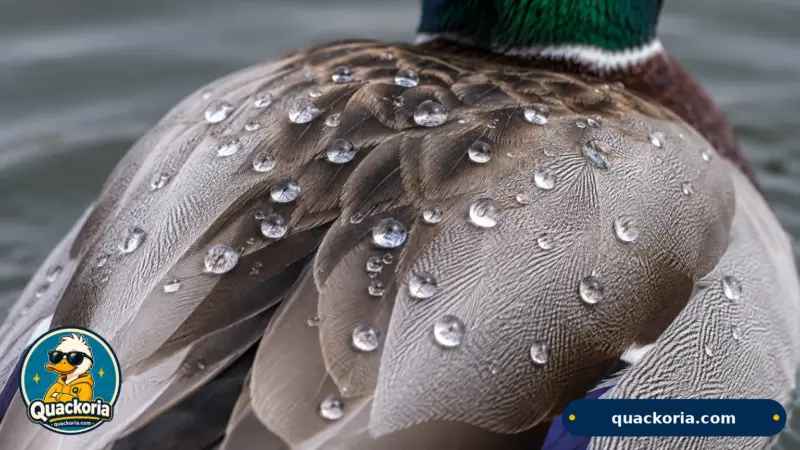
Water rolls off a duck's back mainly because of how its feathers are built. Preen oil keeps that structure in…
Duck Eggs
A duck egg is bigger, richer and has a proportionally larger yolk than a chicken egg — which changes how…
Duck Facts
All three are waterfowl in the same family, but neck length, feeding style and voice separate them long before you…
Duck Behavior
The classic loud quack is a female mallard's. Males rasp rather than quack, and many ducks do not quack at…