Quackoria Learn
Where Do Ducks Go in Winter? Duck Migration Explained
Ducks do not migrate to escape cold as such. They migrate to escape ice, because frozen water means nowhere to feed and nowhere to roost.
Key takeaways
- Ducks migrate to follow open water and food, not to escape low temperatures as such.
- Many species are partial migrants: northern populations move, southern ones stay.
- Migration runs along broad, traditional routes called flyways.
- The birds on your local pond in January may be winter visitors, not the same birds you saw in June.
- Migration is costly and dangerous, and staying put through a hard freeze is risky too.
- Timing is set by food: teal leave in late summer, mallards hang on into November, and much of the flying is done at night behind cold fronts.
Some ducks fly thousands of miles for the winter. Others move a couple of fields. And a great many do not go anywhere at all. What decides it is whether the water stays open — and that depends on how cold it gets, and for how long.
Where do ducks go in the winter?
To the nearest water that stays open, and the food in it. For a mallard breeding in southern England that may mean the same river, a mile downstream. For one breeding in southern Finland it may mean Britain; for one from the Canadian prairies it may mean the Mississippi Alluvial Valley or the Gulf coast. Ducks Unlimited puts the reason in one sentence: migration “enables waterfowl to find food-rich habitats on wintering and migration areas when landscapes to the north are frozen and covered with snow.” How far a duck goes is set by where the freeze stops, not by a fixed destination.
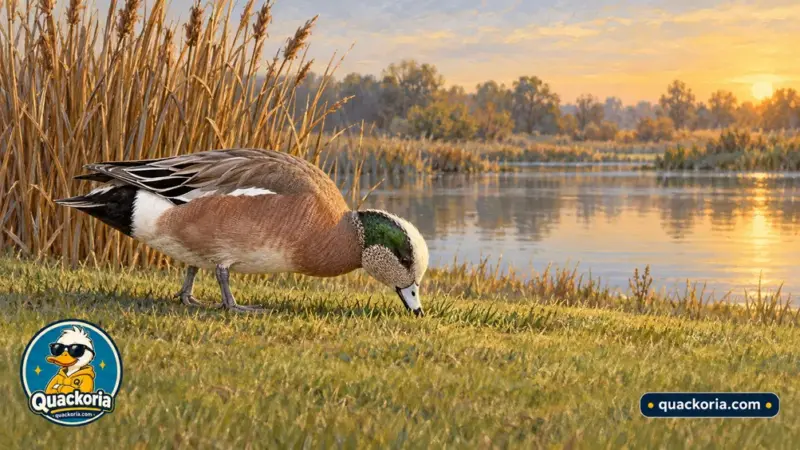
In North America the journeys run along four administrative flyways — Atlantic, Mississippi, Central and Pacific — and the great wintering grounds sit at their southern ends. Ducks Unlimited calls the Mississippi Alluvial Valley “the most important wintering area for mallards in North America”. In Britain the arrivals come the other way: the British Trust for Ornithology’s ringing data show that the mallards joining resident birds each winter “arrive from France and the Netherlands, east through the Baltic States and on into southern Finland and Russia”, and the Wildfowl & Wetlands Trust notes that wigeon “visit us in winter from Iceland, Scandinavia and Russia”. The pond in January is an international place.
Ice, not cold
A duck is extremely well insulated. Dense down under waterproof contour feathers, and a heat-exchange system in the legs that keeps warm arterial blood from being wasted on cold feet, mean a duck can stand comfortably on ice.
What a duck cannot do is eat through ice. Frozen water means no aquatic plants, no invertebrates, no dabbling — and nowhere to roost either. Ducks Unlimited describes the freeze line as the boundary between places with “enough open water for a duck to roost and feed” and places a duck should leave.
So migration is a food-and-roost decision more than a temperature one. When reliable open water disappears, a duck has to move; until then, field-feeding mallards, in Ducks Unlimited’s words, “hunker down through bursts of brutal weather, as long as larger rivers and lakes retain some open water”.
Partial migration
Many familiar duck species are not simply “migratory” or “resident”. They are both, depending on where the individual bird lives.
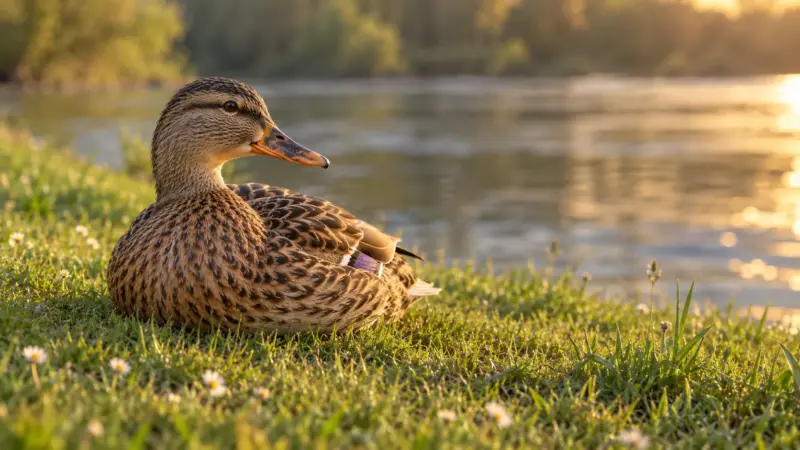
Take the mallard. Birds breeding in northern Scandinavia, Siberia or northern Canada leave every autumn. Birds in temperate western Europe or the milder parts of North America largely stay, moving locally to whatever water remains open. The species is a migrant and a resident at the same time.
This has a consequence that is easy to miss. The ducks on your local pond in January may well not be the ducks that were there in June. Local breeders may have moved a short distance, and their places may have been taken by birds that arrived from hundreds of miles away. The pond looks the same; the population may have partly turned over.
The species most people are watching when this happens is the mallard, which Ducks Unlimited calls “the most abundant duck in the northern hemisphere” and which, where people feed it, can become “very tame and approachable”, in Cornell’s words.
When do ducks migrate?
Autumn migration is staggered by species, and the order is set by food. Ducks Unlimited notes that blue-winged teal, “which feed on seeds and invertebrates in shallow wetlands, reliably depart the breeding grounds in August and September”, while “most diving ducks and mallards may remain up north well into November, until Old Man Winter finally gives them a hard nudge.” Mallards, it adds, “sometimes don’t arrive on wintering areas until late December”. Day length prepares the birds; weather sends them. In Ducks Unlimited’s words, “changes in day length only prepare birds physiologically for migration. Weather events are largely what stimulate them to actually migrate.” The autumn trigger is a cold front, and much of the flying is done in the dark: “In fall, waterfowl migrations, which often occur at night, are usually associated with north to northwest winds, falling temperatures, and high-pressure systems.” Spring migration runs the other way from late winter, following the thaw north — each spring, Ducks Unlimited counts “5-15 million ducks and geese” staging on Nebraska’s Rainwater Basin and Platte River “before migrating north to prairie and arctic breeding grounds”.
Two numbers people ask for. Ducks Unlimited gives migrating ducks a usual altitude of “200 to 4,000 feet” — with one mallard struck by a jet over Nevada at 21,000 feet — and puts the flying speed of most waterfowl at “40 to 60 mph, with many species averaging roughly 50 mph”.
Flyways
Migration follows broad traditional corridors called flyways — “ancient pathways”, in Ducks Unlimited’s phrase, along which the birds take directional cues from coastlines, mountain ranges and major rivers.
In North America there are four principal ones: Pacific, Central, Mississippi and Atlantic. In Europe and western Asia the main routes run from Arctic and boreal breeding grounds down through the Baltic and western Europe and on into Africa; the Convention on Migratory Species maps this as the African-Eurasian Migratory Waterbird Agreement area. East Asia has its own flyway, the East Asian–Australasian flyway.
You can fly all four North American routes yourself in Flyway, our migration game, where every stop is a real wetland. Flyways matter for conservation because they are chains: in the words of the Convention on Migratory Species, “the migration chain is only as strong as its weakest link”. A drained wetland halfway along a route removes a refuelling stop that thousands of birds depend on.
How ducks navigate
Waterfowl combine several systems rather than relying on one:
- The sun, including the polarised light that shows where it is when it is hidden
- The stars, used as a compass at night
- The earth’s magnetic field, a secondary compass that helps most when visibility is poor
- Landmarks — coastlines, mountain ridges, major rivers
Routes may be learned, at least in geese. Ducks Unlimited notes that goose families stay together for up to a year: “The young goslings likely learn their migration routes and breeding and wintering areas from their parents.”
Why the V
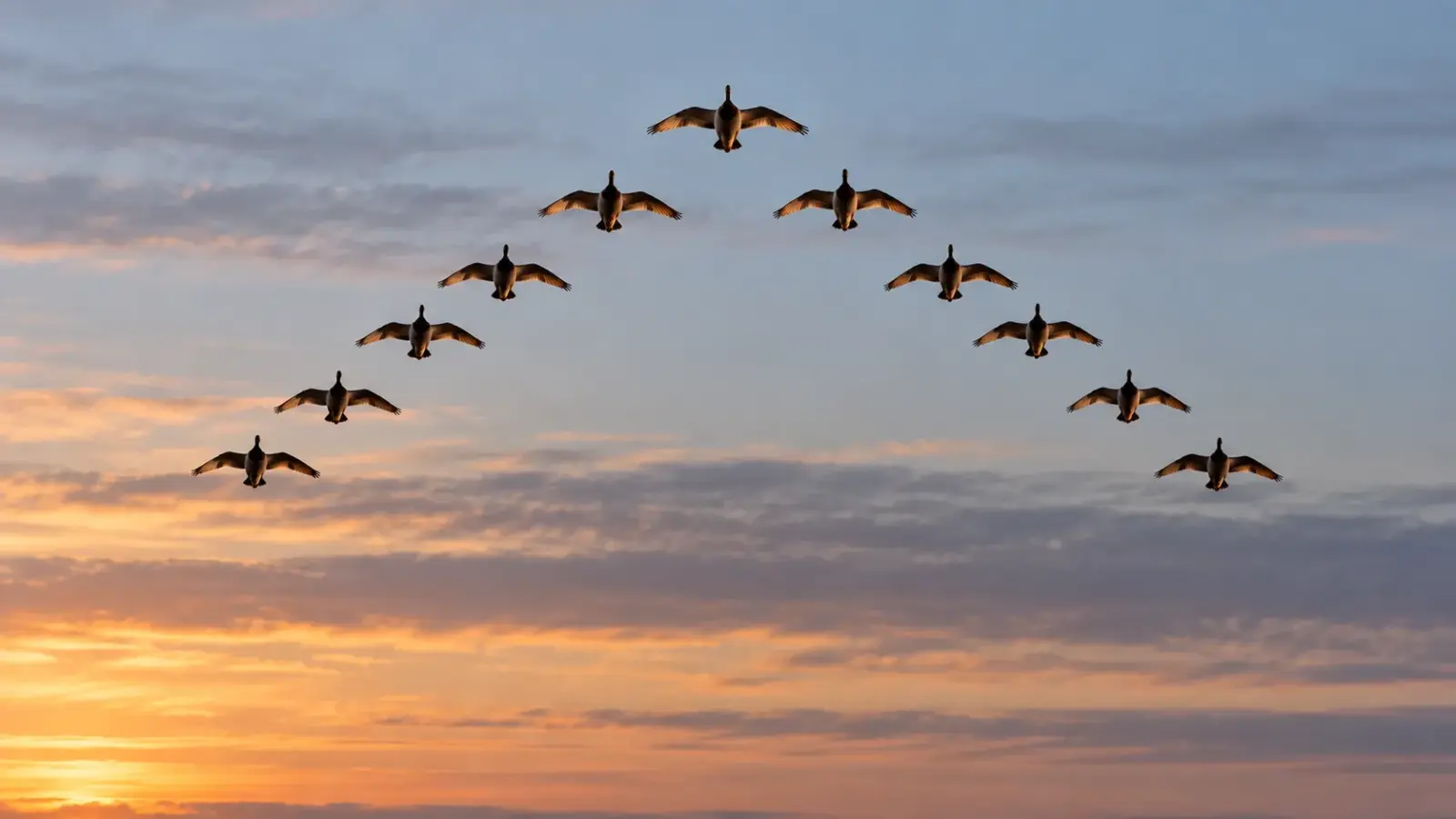
The main explanation is aerodynamics. Each bird flies slightly behind and to the side of the one in front, in the upwash of the vortex trailing from its wingtip. That upward-moving air gives free lift; in a 2001 study of great white pelicans described by Audubon, the saving came to up to 11 percent. The lead bird gets no benefit, which is why the position rotates.
It may also, as BirdNote puts it, “enhance birds’ ability to see and hear each other, thus avoiding mid-air collisions.” How ducks use their voices is explained in why ducks quack.
The costs
Migration is expensive and dangerous. Birds must lay down fat before departure and then burn it on the way. Along the way there are predators, storms, power lines, and the risk of arriving at a wetland that has been drained since last year. How fast they fly, how high, and how far in a day is in how fast can ducks fly.
Migration also spreads disease — avian influenza in particular moves along flyways.
Against that, staying put through a hard freeze is risky too. A resident population caught by a long freeze with no open water can suffer badly: JNCC, the UK government’s adviser on nature conservation, notes that in mid-winter waterfowl can “have difficulty obtaining enough food, particularly in severe cold weather when the ground becomes frozen”. Neither strategy is safe. Resident birds, Ducks Unlimited notes, avoid the energy cost of migrating, but “have less flexibility in finding breeding sites, avoiding predators, and responding to changing food availability and habitat conditions”.
Moult migration
One extra journey that surprises people. In a number of species, some birds — males once breeding is over, and females that did not breed or failed — make a separate flight in early summer, before the autumn migration, to a safe body of water where they can moult.
Part of the reason is that ducks shed all their flight feathers at once and are flightless for several weeks. A flightless duck needs a large, safe, food-rich water body, so male mallards in particular gather at traditional moulting sites from early summer. That is also when the drakes lose their bright plumage for drab eclipse feathers — the change described in our mallard profile.
What this means for kept ducks
Most domestic ducks descend from mallards, but most breeds have lost the ability to fly, and heavy breeds cannot fly at all. They still need what their wild relatives fly to find: open, unfrozen water and reliable food.
Supplying that through a freeze is covered in keeping ducks through winter. How much open water they actually need is answered in do ducks need a pond.
Watching migration yourself
Autumn and early spring are the times. Look for numbers changing on local water, species you do not normally see, and movement at dawn and dusk. Cold snaps push birds ahead of the weather, so the days after a hard freeze further north are often the best.
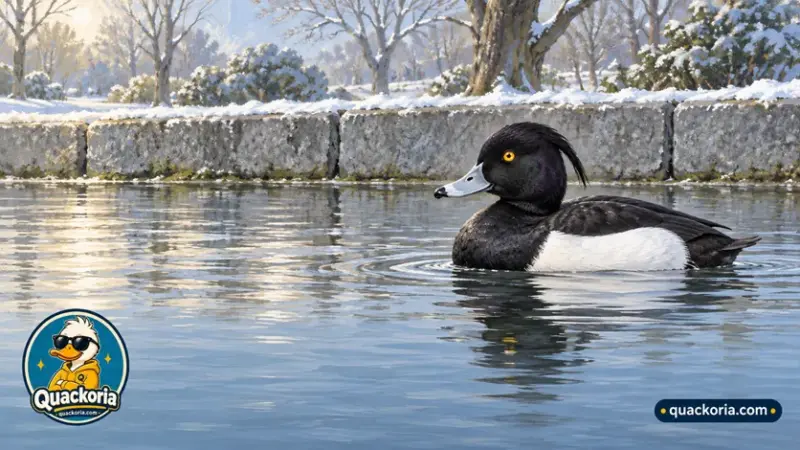
A few species are worth knowing before they arrive. The northern pintail is a long-distance flier: Cornell reports a non-stop flight of 1,800 miles. The hooded merganser and the bufflehead leave late in autumn, some of them only just ahead of the ice. And in Britain the tufted duck that breeds here is joined each winter by birds from Iceland and northern Europe.
If you are trying to work out what has arrived, start by making sure you are looking at a duck at all — ducks, geese and swans covers the differences — and remember that the birds you are counting may have started their day a very long way away.
Frequently asked questions
Do all ducks migrate?
No. Many are partial migrants — the northern part of a population moves south while birds in milder regions stay put. Some populations do not migrate at all.
How far do ducks fly?
It ranges from a few miles to thousands. Some blue-winged teal winter as far south as South America, and Ducks Unlimited describes pintails raised in Alaska flying about 2,000 miles to winter in Hawaii; many mallards move only as far as the nearest reliable open water.
Why do ducks fly in a V?
Mainly, it is thought, to save energy. Each bird flies slightly off the wingtip of the one ahead, gaining lift from the trailing vortex. It may also help the birds see and hear each other and avoid collisions.
Do the same ducks come back to the same pond?
Often, yes. Many waterfowl show strong site fidelity, returning to the same wintering and breeding areas year after year.
Where do ducks go in the winter?
To the nearest reliable open water south of the freeze. In North America that means, for mallards, wintering wetlands in the southern United States and northern Mexico, such as the Mississippi Alluvial Valley and the Gulf coast. In Britain many of the winter ducks are arrivals from Iceland, Scandinavia, the Baltic and Russia, joining residents that barely move.
When do ducks migrate?
In autumn, in an order set by food: blue-winged teal leave in August and September, most diving ducks and mallards not until November, and some mallards reach the wintering grounds only in late December. Cold fronts trigger the actual departures, and much of the flying is at night. Spring migration follows the thaw north from late winter.
Do ducks hibernate?
No. No duck does, and almost no bird does — the common poorwill of western North America, which enters a hibernation-like torpor for days or weeks, is the famous exception. A duck's answer to a frozen winter is to move, or to sit tight on whatever water stays open.
Do ducks migrate at night?
Often, yes. Ducks Unlimited notes that autumn waterfowl migrations "often occur at night", usually on north to northwest winds and falling temperatures behind a cold front, at a usual altitude of 200 to 4,000 feet.
Sources
- Ducks Unlimited — Understanding Waterfowl: The Magic of Migration
- Ducks Unlimited — Why Waterfowl Migrate
- Ducks Unlimited — Amazing Waterfowl Facts
- Ducks Unlimited — Mississippi Alluvial Valley
- Ducks Unlimited — Southern Great Plains and the Rainwater Basin
- US Fish and Wildlife Service — Administrative flyways
- British Trust for Ornithology — BirdFacts: Mallard
- The Wildfowl & Wetlands Trust — Winter watch for dabbling ducks
- Audubon Field Guide — Common Poorwill
- Ducks Unlimited — Hunting the Freeze Line (T. Edward Nickens)
- Ducks Unlimited — Webbed Wonders (J. Michael Checkett)
- Ducks Unlimited — Waterfowl Feathers (David Brakhage)
- Cornell Lab of Ornithology — Mallard range map and migration
- Cornell Lab of Ornithology — Mallard life history
- Cornell Lab of Ornithology — Mallard overview
- Audubon Field Guide — Mallard
- RSPB — Mallard
- Ducks Unlimited — Understanding Waterfowl: Mallards and Their Relatives
- Ducks Unlimited — Mallard Annual Life Cycle
- Cornell Lab of Ornithology — Blue-winged Teal range map and migration
- Ducks Unlimited — How Ducks Navigate (Tina Yerkes)
- Ducks Unlimited — Finding the Way
- Ducks Unlimited Canada — How do ducks navigate long distances during migration?
- Ducks Unlimited — Waterfowl Migration Flyways
- Convention on Migratory Species (UNEP/CMS) — A Bird's Eye View on Flyways
- Audubon — Why Do Birds Fly in a V Formation?
- Scientific American — Why do migratory birds fly in a V-formation? (Bruce Batt, Ducks Unlimited)
- BirdNote — Geese in V-formation
- Ducks Unlimited Canada — Migration: A perilous journey
- US Geological Survey — Avian Influenza
- JNCC — Severe Weather Scheme
- Ducks Unlimited Canada — Feather weather (Elizabeth Ouimet)
- The Open Sanctuary Project — Domesticated Ducks: How We Got Here
- University of Kentucky Cooperative Extension — Selecting Ducks (ASC-198)
- RSPCA Australia Knowledgebase — Why is access to water important for the welfare of farmed ducks?
- Ducks Unlimited — Understanding Waterfowl: Night Moves
- Cornell Lab of Ornithology — Northern Pintail overview
- Cornell Lab of Ornithology — Hooded Merganser range map and migration
- Audubon Field Guide — Bufflehead
- RSPB — Tufted Duck