Quackoria Stories Mill Pond Stories
Pip and the Borrowed Pebble
Keeping Fern's pebble safe should be the easiest promise Pip has ever made. Then sunlight touches the water, curiosity takes over, and he must decide what to tell the friend who trusted him.
The trouble began with a stone too small to make a proper splash.
Pip would remember that afterwards. A large splash would have warned somebody. A large splash would have suited the size of the mistake.
But that came later.
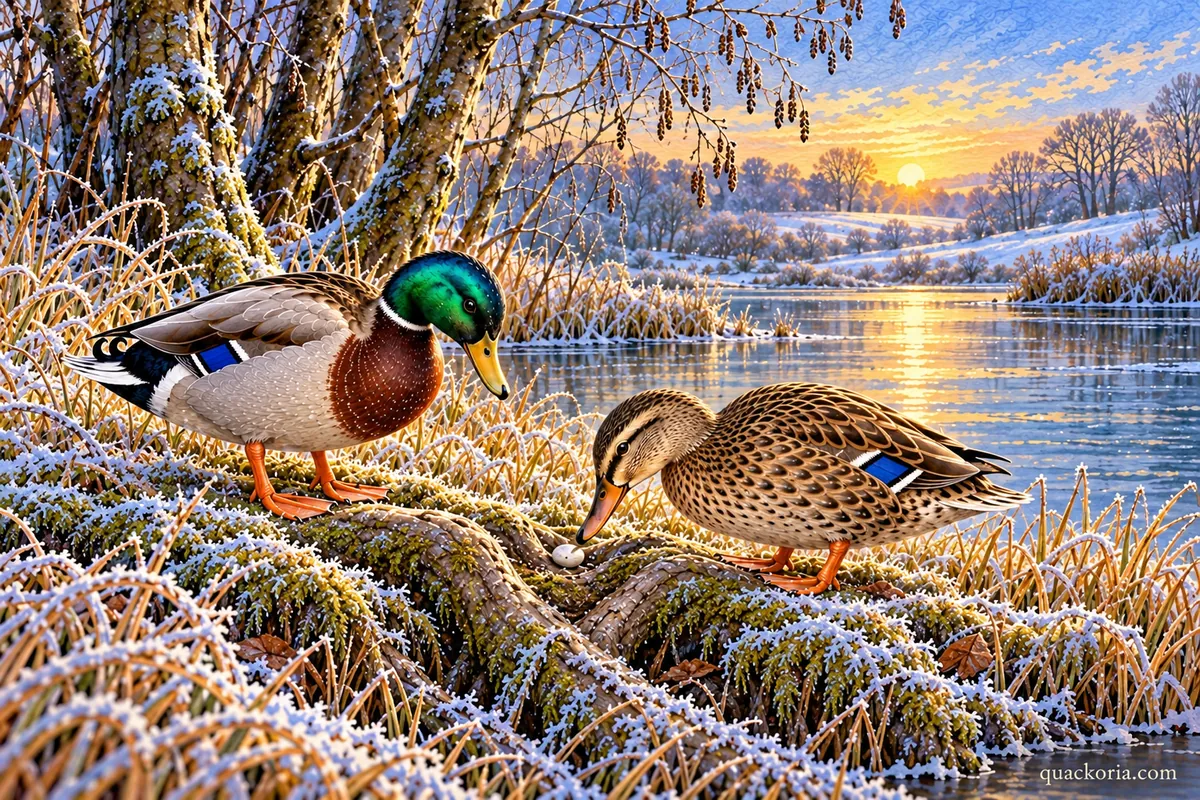
First there was Fern, standing under the alders with something pale beside her foot.
“An egg?” Pip asked.
“A pebble.”
“A very small egg?”
“A pebble, Pip.”
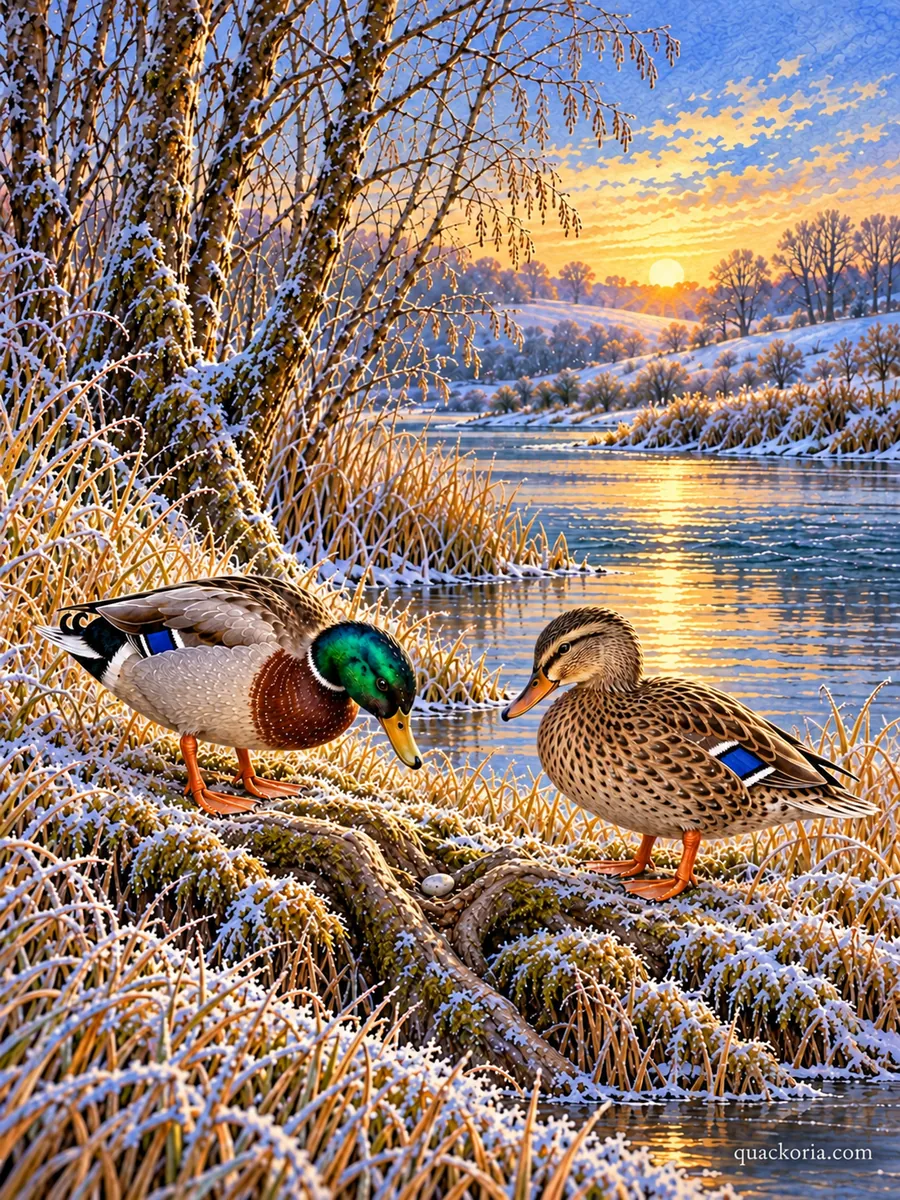
He bent closer. It was smooth and nearly white, with a little crescent missing from one edge. In the cold morning light, it looked as though someone had taken a bite out of the moon.
“I knew that,” he said.
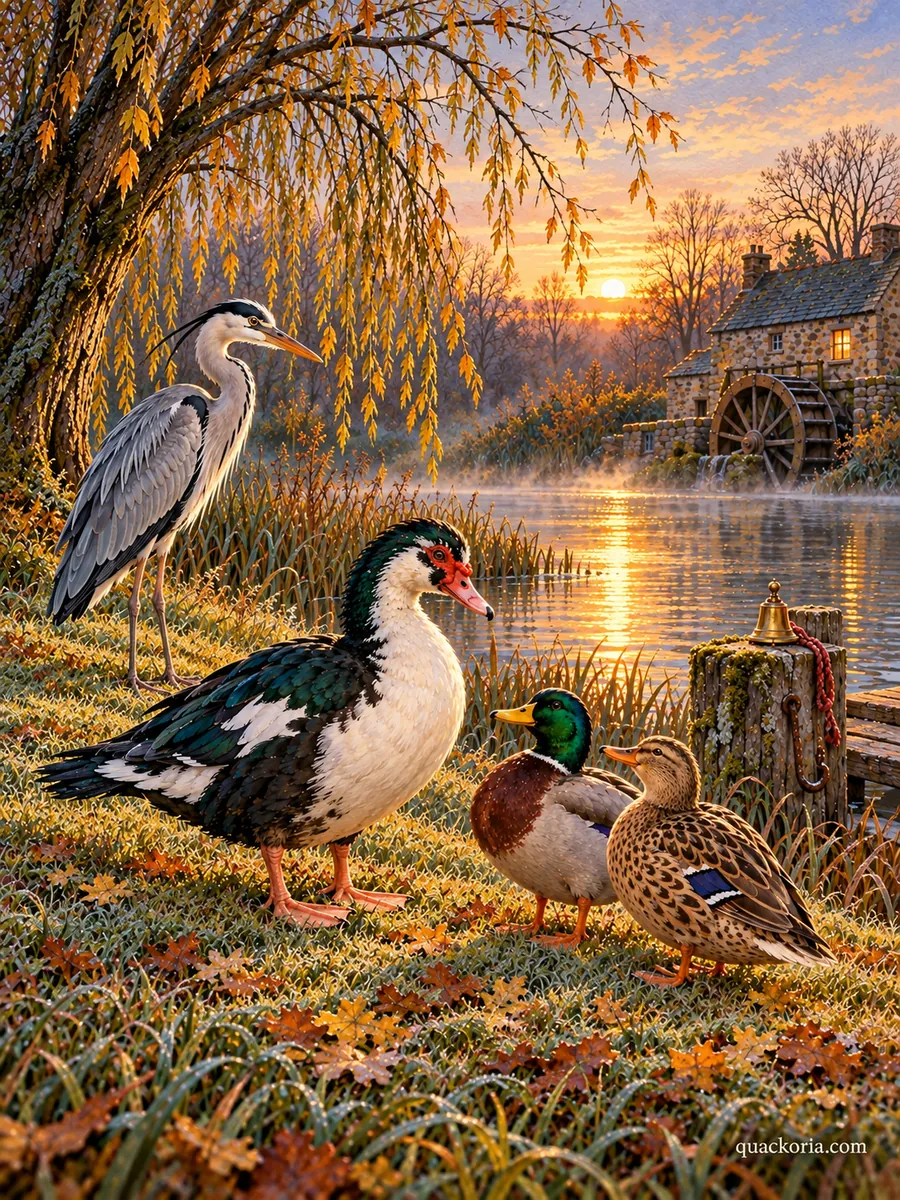
Fern turned her head. She was a little smaller than Nell, with a broad pale eyebrow and darker feathers on the crown of her head. She had the useful expression of a bird who could wait for the truth without helping it along.
The fork in the root
They had been at the river inlet for several days.
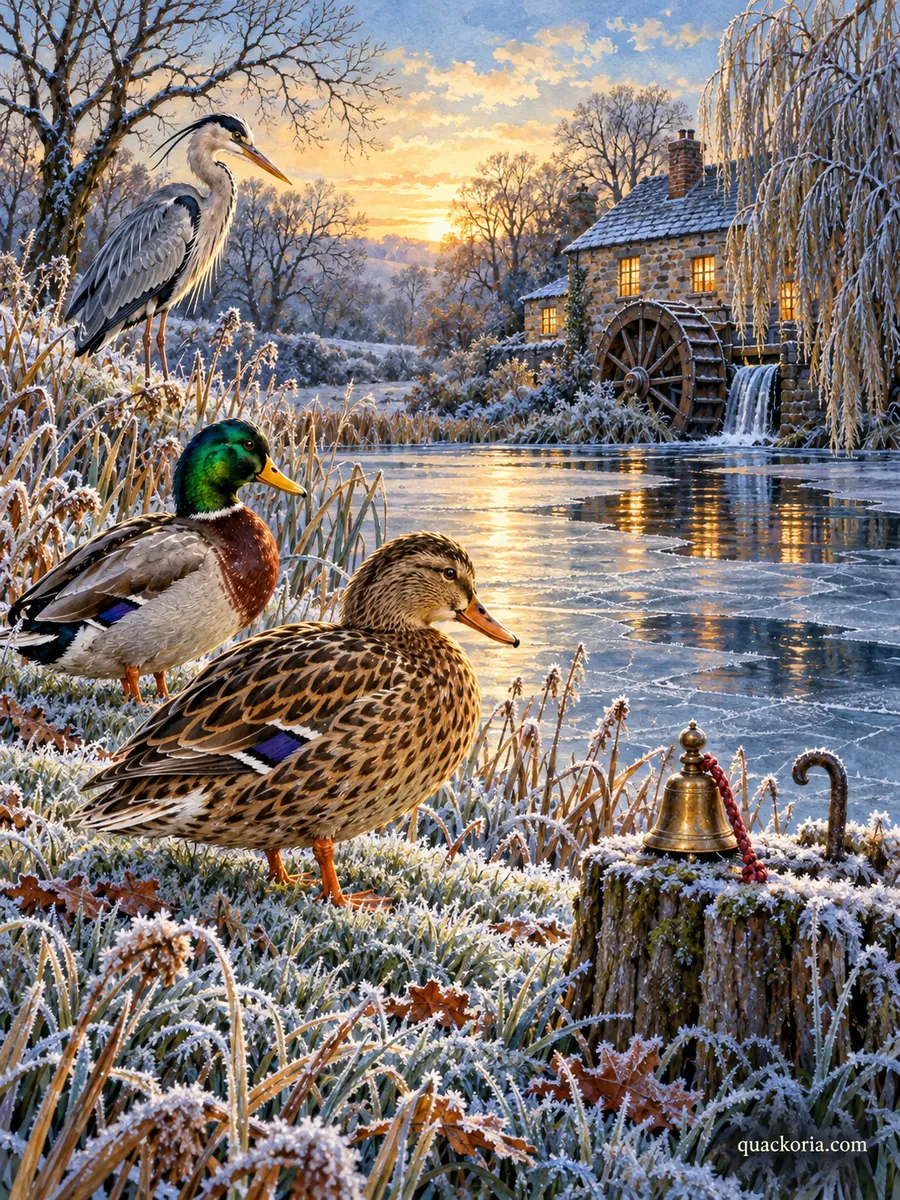
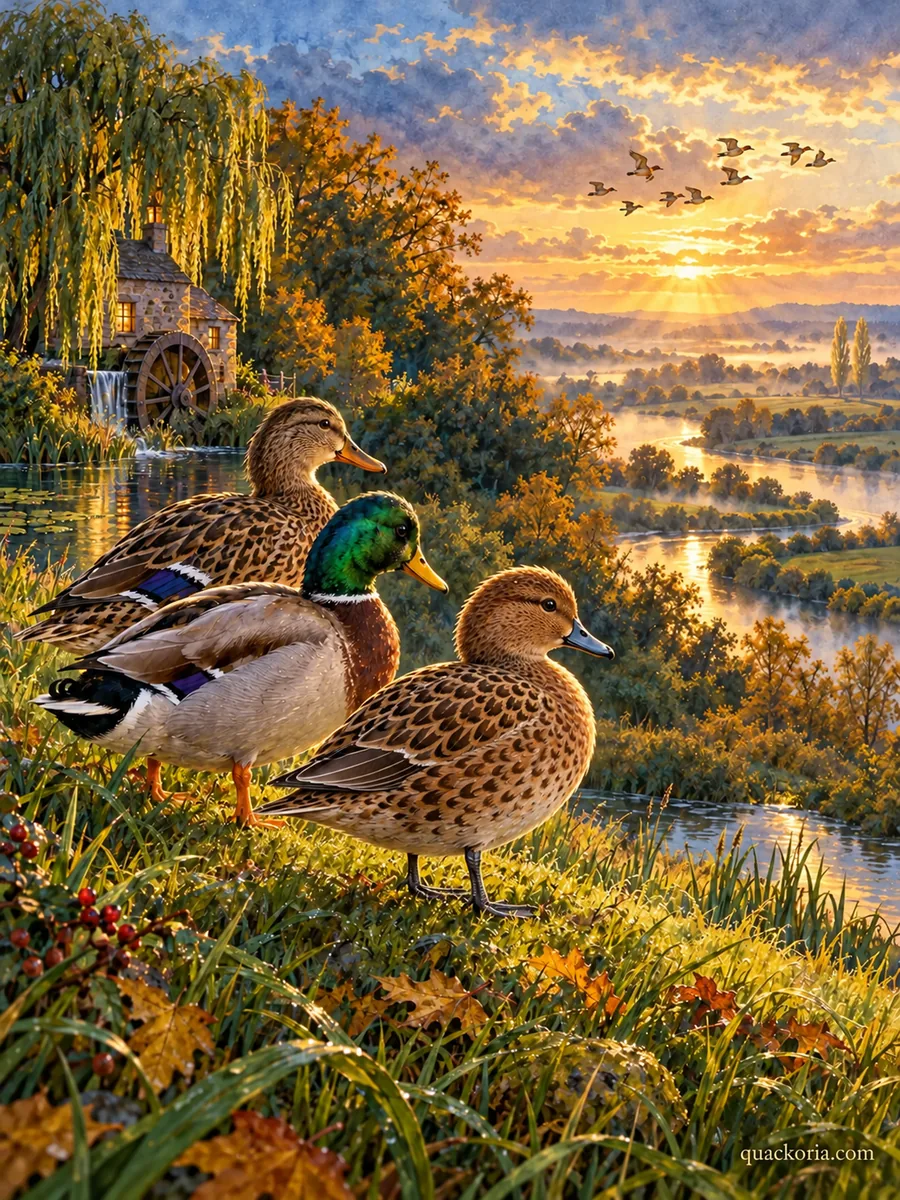
Mill Pond was still beyond the eastern rise, still holding its ice, its bent bell hook and the brass bell nobody had carried away. Here, the bare alders sheltered five Mallards and a Grey Heron from the wind.
They were beginning to learn where the mud stayed soft.
Pip knew Fern liked the little bend beside the roots. He knew she had lived at another pond before Mill Pond. Until that morning, he had not known about the pebble.
“I brought it from there,” she said.
“All the way?”
“It is quite small.”
He looked at the little crescent.
“Why this one?”
Fern considered the inlet. Beyond its sheltered mouth, the river was making a long, steady sound.
“There was a flat stone at the old pond. This pebble used to sit in a hollow in it. On a sunny morning, the hollow filled with light.”
“Was it the best pebble?”
“It was the one I knew.”
Pip could understand that. Somewhere across the cold fields, there was a bell on a stump. He could have drawn its shape with his eyes closed, if he had been the sort of duck who drew things.
Nell called from farther along the inlet. The neighbours had found a shallow patch where they could feed before the sun moved behind the bank.
Fern looked down at the pebble.
“I will stay here,” Pip offered. “I can look after it.”
She glanced towards a dry fork in the alder root.
“Just leave it there. I will come back for it.”
“I promise.”
It was an easy promise. The fork was dry. The stone was small. There was nothing whatsoever to do.
Pip watched her put it in place.
“No polishing,” she said.
“It is already very polished.”
“No improving it, then.”
“I shall be extremely unhelpful.”
Fern laughed and went to join the others.
A better colour
For a while, Pip kept the easiest promise in the world.
He watched a small brown cone drift past the bank. He watched another catch on a reed. He watched a third travel in a slow circle and decided it must have forgotten where it was going.
The pebble sat in the root.
A narrow band of sunlight reached the water. Everything inside it changed colour. A brown leaf became copper. A dull stem shone gold. Even the mud looked interesting, which Pip thought was rather generous of the sun.
He looked at the pebble.
What colour would white turn?
He knew what Fern had asked. He remembered the words exactly.
He also knew he could put it back before she returned.
That thought made the next thought much easier.
He would only touch it to the water.
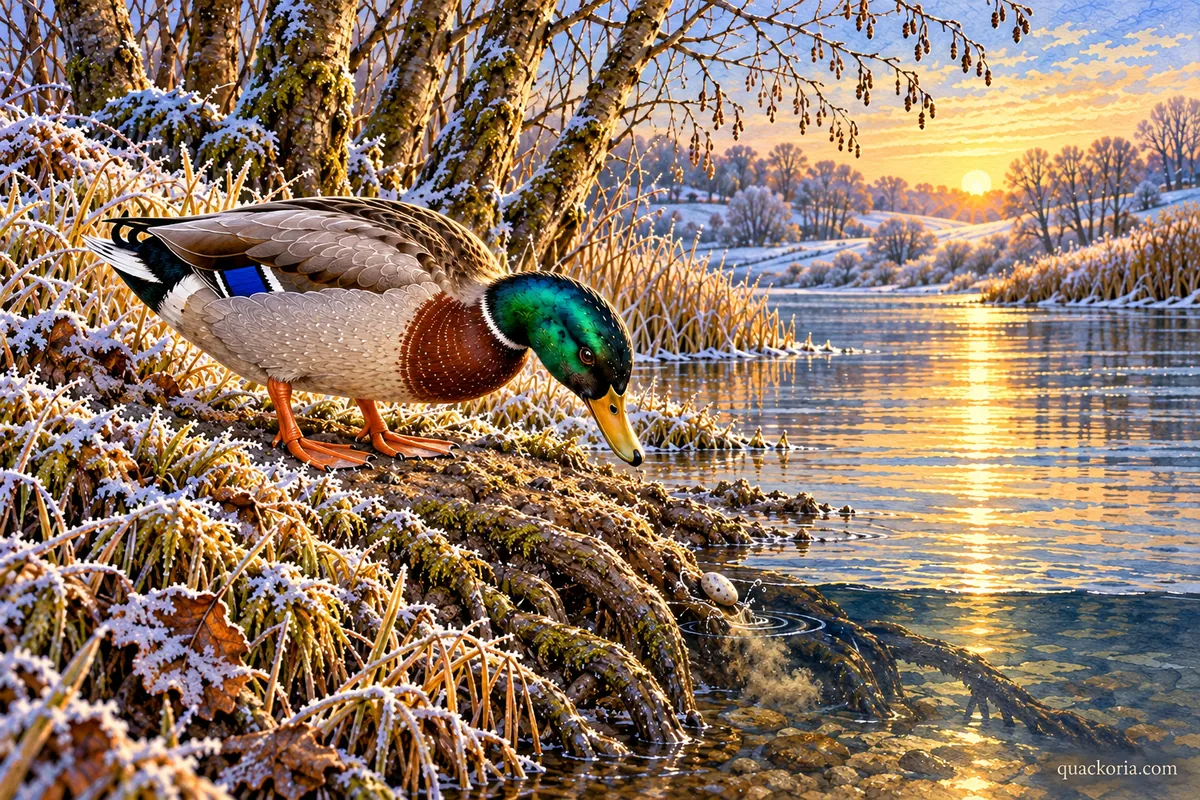
Pip picked up the pebble gently in his bill. It was cold and smooth. He stepped down to the shallow edge, where sunlight trembled above a shelf of mud.
He lowered it.
For an instant the white stone glowed honey-coloured beneath a skin of water.
Then it slipped.
It touched the shelf, rolled once and disappeared over its edge.
The splash was hardly a sound at all.
Pip stared at the place.
He put his head under. His bill found mud, a twig and the slippery root of a plant. He came up, spat away a shred of weed and tried again.
The water clouded.
“No,” he said.
It was a small word for the river. The river did not seem to notice it.
He moved along the bank and reached from another angle. The shelf dropped into a narrow groove between roots, deeper than he could comfortably reach. He backed away when his feet began to lose their purchase.
The water cleared just enough to show him nothing pale.
The other pebble
Gideon found him staring into the groove.
“Something interesting?”
Pip almost said no.
“Fern’s pebble,” he answered.
The heron looked at the water. “Where?”
Pip told him.
Gideon studied the roots from the firm bank. He lowered his bill once, lifted a small tangle of dead stems and set it aside.
There was no pebble beneath it.
“I cannot see it,” he said.
“Could it be farther down?”
“It could.”
“Could you look there?”
Gideon watched the narrow water beyond the root.
“Not by putting either of us into that gap.”
Pip wanted to argue. Instead he looked at the place where he had nearly lost his footing.
The heron stayed while Pip searched the reachable mud once more. Then a neighbour called him from the inlet mouth, and he went to see what she had noticed.
Pip was left with the empty fork.
He began looking along the bank.
A grey stone. A brown stone. A pale stone with a crack through its middle.
Then, beside a clump of grass, he found another small white pebble.
It was nearly the same size.
He turned it with his bill. There was no crescent missing from its edge, but it had a little dark mark on one side. If that side lay downwards, it looked remarkably like Fern’s.
Pip carried it to the root.
There.
From a few steps away, the morning looked repaired.
He took another step back.
It still looked repaired.
One of the neighbours paddled past.
“Fern says you are looking after her stone.”
Pip glanced at the fork.
“I am here,” he said.
It was true. He had never disliked a true sentence so much.
“She was pleased you offered.”
The neighbour went on towards the shallows. Pip watched the ripples spread behind her.
If he left the replacement where it was, that neighbour would think he had kept his promise. Nell might think so too. Perhaps Fern would tell them how careful he had been.
He had imagined that one small stone could close the mistake. Now it seemed to open a new place for it in every bird who trusted what they saw.
Then he imagined Fern asking whether he had left it where she put it.
He would have to say yes.
He imagined her turning it over and asking about the crescent.
He would have to find another answer.
The new pebble had become a surprisingly heavy thing to leave in a root.
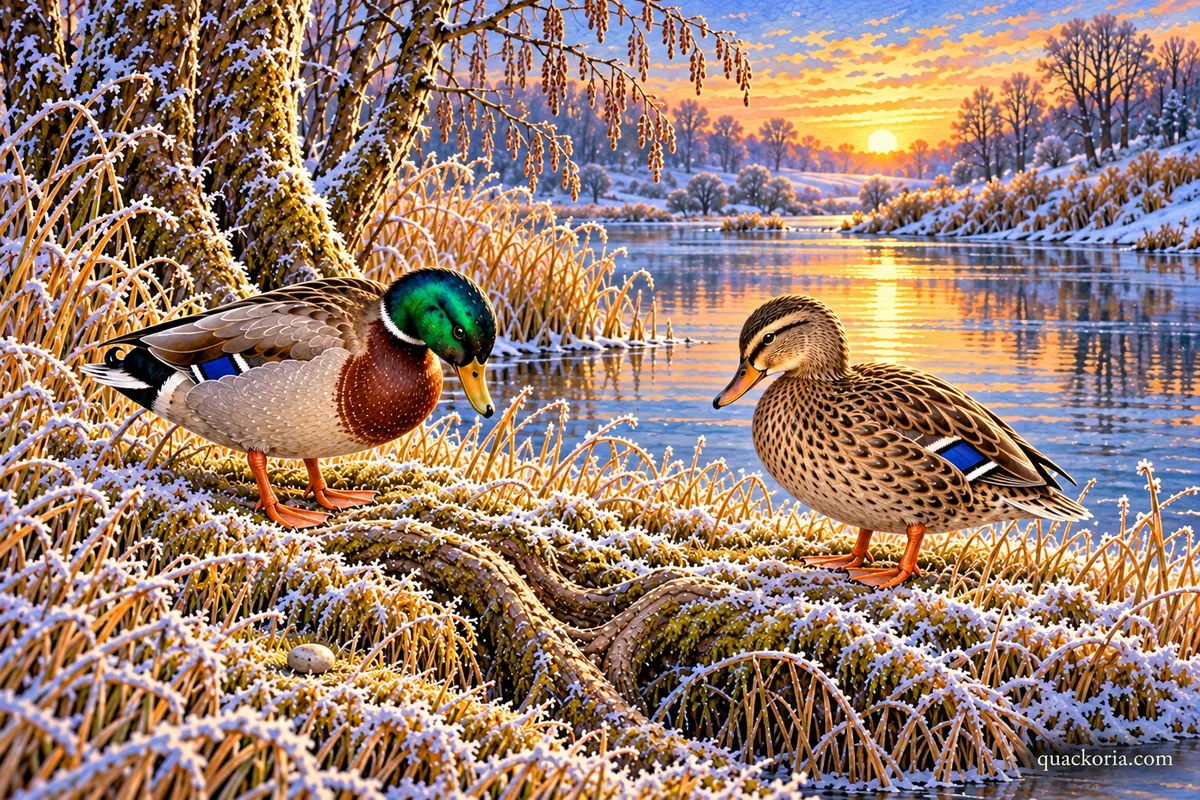
Pip lifted it out and put it on the open grass.
He could hear Fern coming back.
The part without an excuse
Fern shook a drop of water from her bill.
“Thank you for waiting.”
Pip swallowed.
“I moved your pebble.”
Her eyes went to the empty fork.
“Where?”
“I wanted to see its colour in the sunlit water. I took it down there. It slipped into the groove, and I could not get it back.”
Fern stood very still.
He wanted to tell her about the beautiful colour. He wanted to explain that he had only meant to touch the surface. He wanted to say that the water was deeper than it looked.
He looked at the other white pebble.
“I found that one afterwards,” he said. “I nearly left it in the fork instead.”
Fern looked at it too.
“Instead of telling me?”
“Yes.”
The word came out roughly.
She turned towards the water. “Show me.”
He showed her from the firm edge. She searched the shallow shelf with her bill, watched the mud settle and looked into the darker groove.
“Gideon tried the part he could reach,” Pip said. “We could not see it.”
Fern watched the water for a long time.
“I asked you to leave it alone.”
“I know.”
“You said you would.”
“I know.”
He wished he had some larger words. Those were the only ones that fitted.
“I am sorry.”
Fern drew herself up.
“I want to be here by myself.”
Pip glanced towards the neighbours. He wanted to stay until she was less angry. Leaving felt horribly like doing nothing.
“All right,” he said.
He went.
At the far end of the sheltered bank, Nell lifted her head.
“You look as if breakfast has bitten you.”
“It is worse than breakfast.”
He told her the whole of it, including the other pebble.
Nell listened without supplying the parts he wanted her to say.
At last he asked, “How do I make her feel better?”
“What did she ask you for?”
“To be by herself.”
Nell looked towards the root.
Pip looked too.
Fern was still there, and he was still not going to her. It was a harder kind of looking after something than he had expected.
A smaller promise
That afternoon, Pip found three more pale stones.
He left them where they were.
He also thought of a very fine speech about how Fern still had her memories even without the pebble. He tried the first sentence silently.
It sounded like an excellent speech for somebody who had not lost anything.
He let that stay where it was too.
Near evening, Fern came to feed along the margin.
Pip moved aside to give her room. She tipped forward, came up with a few seeds and tried another patch.
He wanted to ask whether she was still cross.
He knew she was.
So he fed at his own patch until she spoke.
“Tomorrow I want to look at the bank below that root. Only the part we can reach from the shallows.”
“I can find it for you,” Pip said.
Fern turned.
He stopped.
“I can come with you,” he tried again. “If you want. I cannot promise we will find it.”
“I want you to wait by the wide root while I look. Not right beside me.”
“I can do that.”
“And no replacements.”
“No replacements.”
The following morning, he was at the wide root before she arrived.
Fern checked the reachable mud. Pip waited.
A pale shape appeared between two stems. His heart lifted. She brought it up: a piece of shell, empty and thin.
She let it fall.
They stayed until the sun reached the alder trunks. Then Fern backed away from the shelf.
“That is enough for today,” she said.
Pip had a suggestion ready. A different angle. A longer search. Something that would turn enough into a beginning.
He closed his bill.
“All right.”
They went up the bank together, with space between them.
The hollow full of light
For another day, Fern was quieter with Pip than she used to be.
He missed the small jokes she would have made. He noticed how often he expected her to make the morning easy for him.
When she asked him to leave a feeding patch undisturbed, he did. When he said he would wait, he waited. Nothing shone or rang to announce these things.
On the third afternoon, she came to the wide root.
“You asked me why that pebble,” she said.
Pip lifted his head.
“You said it was the one you knew.”
“There is more.”
He moved a little, leaving her the sheltered place beside the bank.
Fern settled there.
“At the old pond, there was a duck who always arrived at the flat stone before me. Every morning, I thought I would beat her there. Every morning, there she was.”
“Was she very fast?”
“She lived on that side.”
Pip made a surprised little sound. Fern’s bill moved almost into a smile.
“One day I went round before sunrise. I was very pleased with myself. When the sun came up, the hollow in the stone was full of light, and the pebble looked warm enough to hatch.”
“I said it might be an egg.”
“You said many things.”
He let her go on.
She told him about the flat stone, the other duck and a morning mist that made every reed look taller. Pip could almost see the place, though he had never been there.
When she finished, the wide root had a small patch of sunlight on it.
The fork was still empty.
“I wish I had left it alone,” Pip said.
“So do I.”
She stayed beside him for a while.
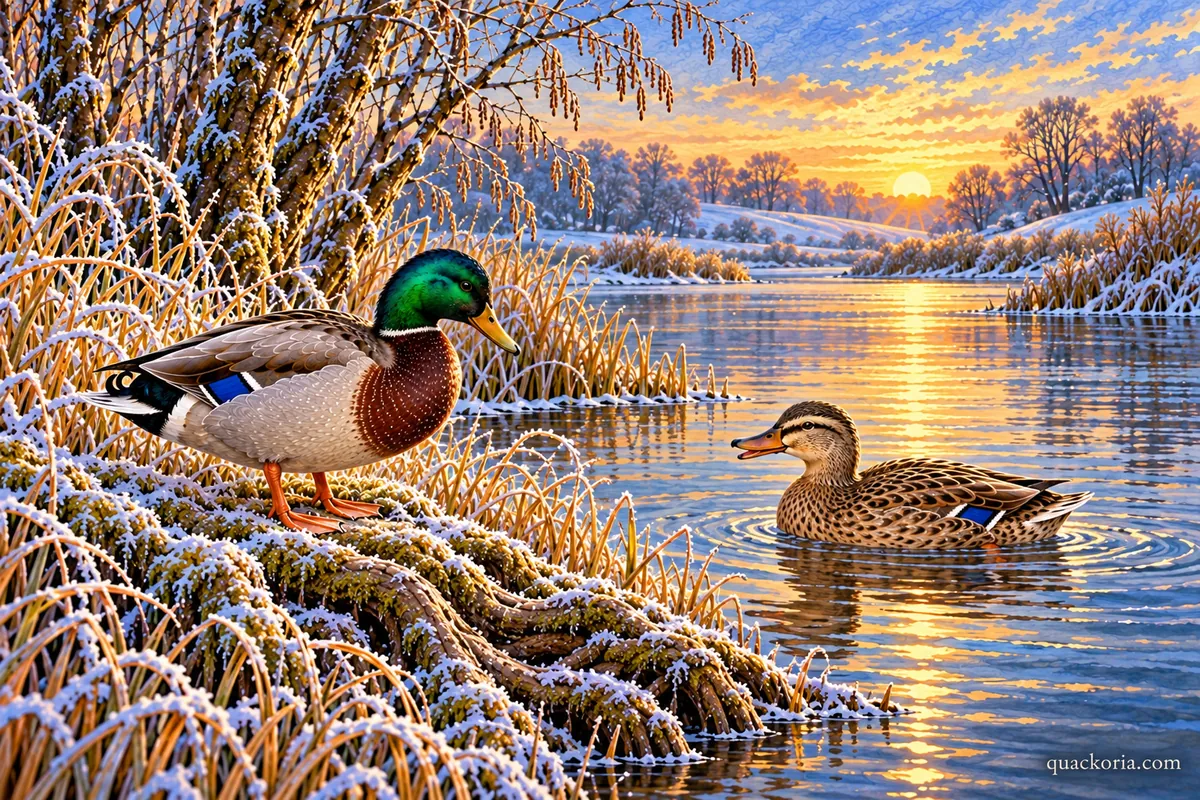
Before leaving, Fern asked whether he would come to the bank in the morning.
“To look again?”
“To feed.”
“Yes,” said Pip.
It was a small promise. He knew where it began and what he would have to do.
The next morning, he was there.
Characters in this story
- Pip — a curious male Mallard facing the consequences of breaking a promise
- Fern — a female Mallard with a keepsake from her old pond
- Nell — Pip's female Mallard friend, who listens without offering an easy excuse
- Gideon — a Grey Heron who checks the reachable water
- Two other Mallard neighbours — residents of the sheltered inlet